

Briefly, ‘formation’ of the self is a central concern in The Bluest Eye and The Complete Persepolis. Drawing on the set critical works by Rocío Davis and Anne Salvatore, compare the ways the self is presented in the novel and the autobiography.
“We die. That may be the meaning of life. But, we do the language. That may be the measure of our lives.” (Toni Morrison)

When the wartime occurred in many regions all over the world, people’s lives were put at risks and people thus experienced its atrocity. The images of the wartime’s vestiges covered in many aspects of life and based on that interwove and became important elements inspired writers in terms of literature. Typically, the imageries of Afro-American slaves had impacts from a racialized society and the issues of recognizing injustice and religiously perceptive revolutionaries in The Middle East countries. In a range of twentieth-century texts, many authors penned up what they saw and truly experience by various creative works that could utilize the reality of human dignity and how it was formed.
In this essay, there will be two different kinds of writing style of two different authors and from two different nationalities – a memoir graphic novel The Complete Persepolis by Iranian-French writer, Marjane Satrapi, and a tragic novel The Bluest Eye by African-American writer, Toni Morrison, which are going to be discussed in a connection with two sets of critical works, one is by Rocío Davis “A Graphic Self: Comics as Autobiography in Marjane Satrapi’s Persepolis” and the other is by Anne T. Salvatore “Toni Morrison’s New Bildungsromane: Paired Characters and Antithetical Form in The Bluest Eye, Sula, and Beloved”. In a certain analysis, the essay will address some shared similarities between the two aforementioned texts by viewing how the formation of the self has structured significant meanings in accordance to how the characters control their story of self and how environmental culture constructs the self.
————————————————————————————————————–
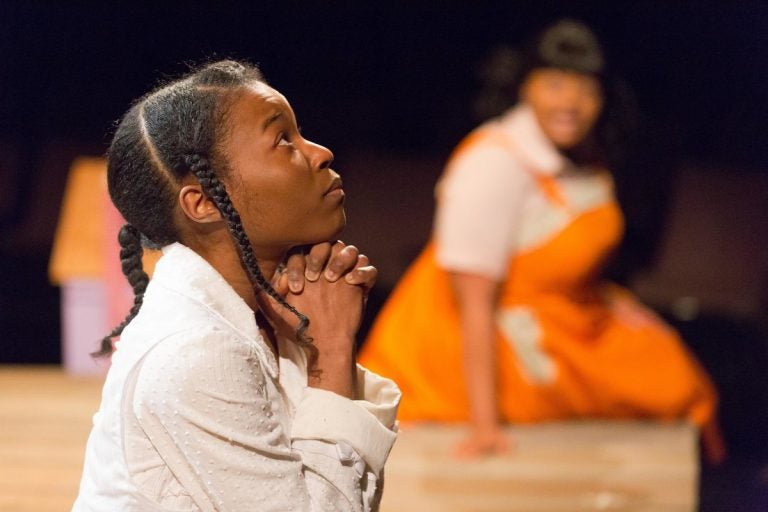
In the first place, it is remarkable that controlling the story of a life in both analysed texts and novels indicates how each character formed the story of the self. Thus each figure’s appearance presents distinctive colours in which life is formed. Having looked at The Bluest Eye, the portraits of Pecola and Claudia are divergently presented. To Pecola, she often fail to attempt to bring herself out of passivity and indifference, whom Salvatore describes that she creates “a severely circumscribed vision of herself” and other than that she seems to be entangled herself in the white values, and she desires “for the white standard of blue eyes” (Salvatore 158). Whilst Claudia attains her own image by framing her own character and resisting “the white contempt for her blackness.” (Salvatore 159)
In the novel, the image of Claudia is a person who willingly rejects any inward submission to what people in the community think about black values and preserves the difference. That is the moment that changes the process of thought about what a vision of beauty is. As children, Claudia and her sister Frieda know this and the voice of childhood helps the formation of self be reinforced insightfully. “We felt comfortable in our skin, enjoyed the news that our senses releases to us, admired our dirt, cultivated our scars, and could not comprehend this unworthiness.” (Morrison 72)
Furthermore, that makes Claudia’s image be out of a deceptive appearance like Pecola is the way she communicates with people and how she defines beauty in the society’s ill-treatment to a black group of people at the time. She hates Shirley Temple, loves Pecola, envies Frieda, or even yells Maureen and a group of boys by presenting her emotion directly and not passively admitting all. That is to reason why Claudia succeeds to construct her self-story. As analysed by Salvatore, “she remembers, narrates, and bears witness to Pecola’s story, even though by her insights she implicates herself together with the whole black community…” (Salvatore 159).
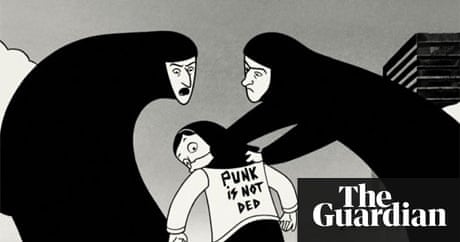
In comparison, Marjane Satrapi – the author in Persepolis has some shared characteristics to Claudia MacTeer in term of formation of self. At the age of ten, the author is forced to wear a veil to school under a cultural revolution in Iran, which she belongs to protest groups. Moreover, she also asks her parents to take part in the demonstration though she is still too young, or she tries to imagine how her grandfather can overcome the torture in the cell when he is imprisoned as a communist. These points make readers understand that the inside resistance of a little girl in accordance with her conversations with God – an imagined character, and her classmates and teacher to let them know that she will be a cultural and social equality ambassador.
Especially, when she becomes mature, Marjane powerfully discovers her own individuality. That is when she attends a lecture “Moral and Religious Conduct” to conduct students and to Marjane to wear a long veil but she turns out to confront the committee that the veil could thwart her from moving effectively. Significantly, her representative scales the symbol for justice, love and the supreme sacrifice. What makes Marji similar to Claudia is that she does not passively accept the change. She gives out her inner voice as the characterization. Thus the formation of self is to say personal perspectives and to treat one another reasonably and respectfully. To Marjane, “her early representation of herself stresses the happy contradiction that often exists in a child’s perception of the world…” (Davis 272).
Therefore, the formation of self plays a vital role not only to the two characters to attain their meaningful childhood but also to portrait the human dignity in life on earth, which both Claudia and Marjane archive their self-image inscribed in their life story.
————————————————————————————————————–
Moving on to the external aspect, it is undeniable that the factor of environmental culture significantly forms an individual life and thus one’s coming of age story. This is understandable as hometown shapes one’s first vision of self and partakes an important part in one’s blood.
In The Bluest Eye, a racialised society occurred and challenged the standard of beauty between the white community and the black one. The values of blackness are diminished when they reluctantly live together with a white-dominated culture. Thus it is seemingly difficult to recognise the concept of beauty of one another. To Pecola, this can be the blue eye, which physically changes her appearance but she inactively reacts to the white scorn, while Claudia again overcomes the ill-treatment of the whiteness in society. In other words, cultural and environmental elements instigate the misplacement of Pecola’s selfhood, apart from Claudia MacTeer. Although “Mrs MacTeer’s often harsh scolding, and precarious economic status…, Claudia still feels in a deep-rooted way that she is loved and secure.” (Salvatore 158)
To conquer the race-based class structure and above all, Claudia’s psychological survival is a prerequisite task, which she performs well. That is her anger. If she accepts her racial differences, she will not react by anger instead of submission. A concept that Claudia internalizes herself beyond what people normally understand about herself and her black community is communication. As mentioned above, she communicates meaningfully with others. This is not easily acceptable if she does not like to do so. But even to those who she hates or she loves, she still speaks to them what she has thought and that concretes a little Claudia’s image living among many of those black people who willingly submit with the white contempt unreasonably.
In the same sense, Marjane Satrapi’s interpretive efforts allow her to live and experience and understand her society where she grows up and remembers. At the beginning of the novel, with a short introduction of Iran history, the author’s purpose seems to form the reader’s understanding of what she really wants the message to be delivered throughout the whole story. Having lived in two different cultures, she experiences an encounter with those who are Westerners and Iranians. However, this interestingly fortifies Marji herself to seek her own identity and what she needs to define her self-story and her own sense of selfhood. The aftermath of Islamic Revolution and Marxist influence impact on her hometown after the atrocity of the war, a little girl lacks education and desires to go to school, thus she “wants to be an educated, liberated woman. And if the pursuit of knowledge meant getting cancer, so be it.” (Persepolis 77)
Under the social context, the bilingual French school where Marji study in 1980 suddenly separated boys and girls, and the veils were used at the time. This is invisibility that consists of the physical appearance and the marginality of women. Therefore, Marji’s desire about her education is reasonable and she wants freedom and she wants her to be like Marie Curie and she wants gender equality. Furthermore, when she realizes her parents are telling a lie to her about a trip (her father’s death), and she recognises that she is too young to understand the adult’s conversations though she reads a lot of books. In spite of her young age, Marji suffers from an awkward society and that stimulates her process of thinking earlier, gets adequate experience and accustomed to living with fear. According to Davis, “Marji’s life develops in a context of increasing political turmoil and violence, yet she necessarily sustains the processes of childhood and adolescence.” (David 273) Subsequently, both Claudia and Marjane frame their characteristics of self by raising their awareness level within their coming of age story.
The recognition of self is not easy and it will be much more difficult if one’s selfhood is located in a racialized or chaotic society. The imageries of Claudia and Marjane draw a jump-over of self, which develops beyond environmental culture to set high the insight of a human person and to increase the living values.
————————————————————————————————————–
As a result, the relationship between one individual and the environmental culture is significant to any degree of existential level. Life of a person is marked from birth to death. Thus the journey from childhood to adulthood carries the establishment of selfhood. By critically viewing the two remarkable aspects of the two novels by the two different authors from the two different countries and in the two different places in the globe, the story of a self seems to turn out more than that tiny number. The echo of war cannot be self-defeated and the issue of solidarity after war thus becomes a question.
However, having read these two typical stories The Bluest Eye and The Complete Persepolis, the price of the question can be partly paid. Everyone knows war is vulnerable and it is hard to connect one another if people keep silent. The voice of the two analysed characters above sheds light to the core of the question, which people still have to deal with it. That is the speaking out of self. If one knows to advocate the other, society will be less indifferent.
Equally important, the actions for others like what Claudia treats Pecola and the way she communicates with other meaningfully can help at least the reader can realize the blackness values. The care of others is worth respecting than looking down on them if one a person does not necessarily get in their life. Above all, the formation of self strikes the value of beauty not only between the black and white communities but also the compassion upon others. In The Bluest Eye, it is when Claudia dares to speak out her inner voice instead of being submissive and she is willing to help Pecola without benefit, though she knows the baby is of Pecola’s father.
In The Complete Persepolis, it is when Marjane wishes to become a justice and love symbol. That are all enough to the two little kids and the great vision of life, when they are mature to tell these two stories, is the lesson of life beyond any trivial values. Lately, in the two novels, the authors highlight that the influence of social context impacted on the characters’ physical growth and personal identity, and dignify reactions to all of the things happened and to the surroundings penetrate deeper one’s formation of their own personal character and an optimistic vision of life – the belief in an actual good created by self.
Work Cited
Anne T. Salvatore “Toni Morrison’s New Bildungsromane: Paired Characters and Antithetical Form inThe Bluest Eye, Sula, and Beloved”, Journal of Narrative Theory, Vol. 32, No. 2 (Summer, 2002), 154-178.
Morrison, Toni. The Bluest Eye. London: Vintage, 2016. Print.
Rocío Davis “A Graphic Self: Comics as Autobiography in Marjane Satrapi’s Persepolis”. Prose Studies 27 (3) (2005): 264 – 279.
Satrapi, Marjane. The Complete Persepolis. The United States: Pantheon Books, 2003. PDF file.
 The Digerati Politics