
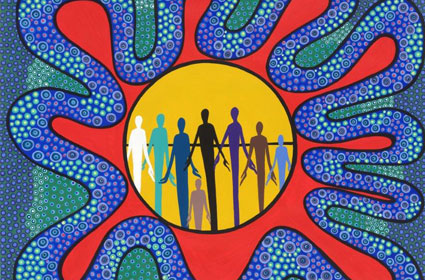
NB: Looking into the core elements of a democratic and fair Australian society.
I begin by acknowledging the Traditional Owners of the land on which we meet today, and pay my respects to Elders past and present.
It has been told that once a person can aptly speak up her or his voice without fear or being forced by any powers, this is inherent human dignity, which is considered as one of the most basic principles of democracy. Whether the democracy is merely encapsulated by how individual interests are bound up under the recognition of the society and the constitution, Thucydides – an Athenian historian and generally supposed that the needed characteristics of democracy “depend as much on an attitude of mind, on unwritten law and customs, which require a resolute adherence to the ideals of freedom, equality and friendship, as on the institutions of state.” (Maddox 8)
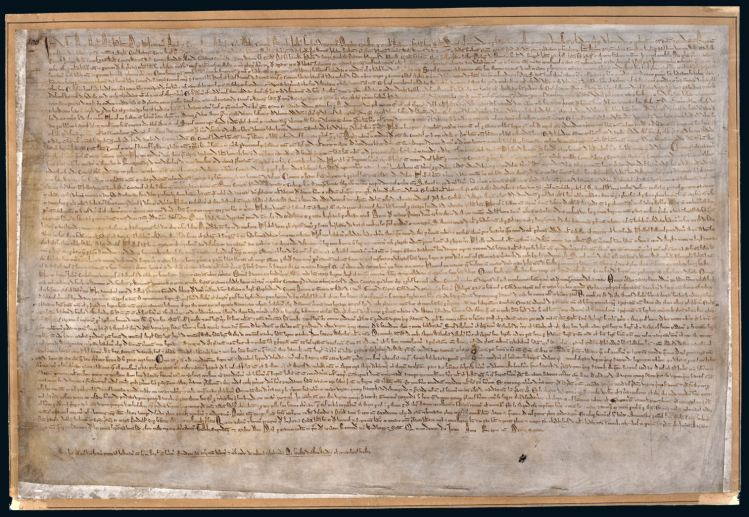
Magna Carta
Nonetheless, there are many thoughts, which assure the democratic relationship between the state and the society in a political system, while others critique that a democratic system must be contributed by the democratic congregation, by which it is likely to be utilized by mutual understandings between the state and the society. Altogether it serves the common good and flourishes the whole community.
Although democracy is not being well-understood in every political system as same as each other, it is preeminently defined between the relationship of a system of its government and the society. In specific, Australia – a nation named of its Australian continent, according to the Democracy Index 2016, was ranked 10th in the top ten of most democratic countries in the world, while this rank used to be 8th in 2006.
So common questions like where are the standards of a democratic system or democratic measures? Why has the rank in terms of democratic system fluctuated in Australia? This discussion will not seek an answer for the standardization of a democratic system but rather than to explore some aspects in the Australian political system, which has made Australia a democratic and fair society through the visions based on 1) the political equality, 2) popular control of government, 3) civil liberties and human rights, and 4) the quality of public deliberation will be evaluated in the integration with the conclusion.

First, it is vital to address the stature of political equality in the Australian democratic system. This is due to the holistic contribution of both sides. The authorities’ regime is only established through voting by their citizens then become the representatives; the central duty, first and foremost, of the authorities’ regime, is to serve their citizens in the role of the law-making bodies; in other words, the role of the states is to make laws on behalf of the people that structure the way their citizens live, then the responsibility of citizens is to scrutinize the works of the authorities.
According to the Democratic Audit of Australia, political equality is the core element of democracy to manifest the undividable relation of the government of the people, by the people and for the people. For instance, the result of the 1975 election in the context of the Australian constitutional crisis, after the culminated dismissal of the Gough Whitlam government of the Australian Labor Party (ALP) by the governor-general Sir John Kerr Leader of the Opposition, and Malcolm Fraser of the Liberal Party (caretaker PM), was acknowledged by everyone. (Warhurst 22) This issue was one of the controversial circumstances in Australian political history due to the establishment of the Constitution of Australia. Whilst the Parliament of Australia is composed of two houses: the House of Representatives and the Senate and together with the Queen (following the British system or “Westminster model”), the roles of the Parliament are to operate the democratic element in the system of the government.

In other words, although the dismissal was highly an intention and manifested the encroachment of the political system, the election process then urged to the nation without demur and beyond the partisanship. Another example could be taken was the election of the Malcolm Turnbull government is early 2016. When the Tony Abbott government was considered as a failure to the stewardship responsibility of the Australian natural heritage and also to recognize the Australian values, it was, thereafter, immediately a call for re-election and decided the Turnbull government take over with the major acceptance of everyone. In an assumption, the relationship between the state and the society is clearly equally remained in the climate of the political system and even implicitly or explicitly ensures the ideals of democracy in the very society and the government of the state.

Second, the unity between the state and the society is once being understood as one of the vital elements of the democratic system, the government is expected in return to control the popular elements or the common good of the Australian society. In regards to the democratic political system and liberal democracy, the law-making bodies seek fairness in the legal system or justice for all. Whilst the social movements tell us more about how decent the government works in both the controlling and value flourishing aspects. Johanson and Glow substantiated the Australian social democracy under the Paul Keating stewardship which was seen as a reticent devote in his efforts to “robust the Australian social democracy”. This was not only to address the Australian culture and identity in the world but also to coin the essential opportunity to prosperous Australia’s economic and social well-being.
In the Julia Gillard government, as the PM of the nation, she delivered the misogyny speech and reinforced the gender stereotype in the Australian special politics and the world general politics. This can be said the tremendous achievement of the social movement and brings the nation especially women to have a sense of political involvement so that no one could be left behind the society.

As subsequence, the number of women elected to the Australian Parliament significantly reached 30.8% in 2009 and in 2014 this proportion was 38% in the Senate and the House of Representatives was 26 % (Gauja 27). As such the social movement or promotion is to say about the democratic achievement because of the problems facing complex societies, but the government determines in protecting and seeking ways to promote the social forces and their functions and the common good too (Burgmann 10). Although the success of the Australian government in the popular control lies in the leadership possibility and it may be varied in a different period, the stability of democratic and fair society still cores the political element.

Third, it is important to investigate how well the civil liberties and human rights issues are practiced in the Australian democratic society. These are best known as the two aspirational aspects of democracy. Thanks to the definition of the democracy, this is correct as it comes from the Greek demos, meaning citizens, and kratos, power or rule (Warhurst 8). Also, as introduced in the beginning, democracy is as the government by the people. From those perspectives, civil liberty and human rights are inherent to every human person. John Hirst comments on the Australian liberal democracy that liberalism is the best part in this discussion because whatever the vote results are, the power of the state is partial and the preservation of people’s rights is recognized. This could mean that the power and authority rest with the citizens rather than a ruling elite.

He also points out that democracy can disappoint us as the people are ruled by the elected representatives and there is, thus the people get negative control. It is best to investigate the multicultural society in Australia. On the one hand, the Aboriginal and Torres Strait Islanders are the Traditional Owners of the land. Therefore, the government treats the Traditional Owners tremendously tell us how well the liberal demos and Kratos in the respect of the Indigenous communities is. It is time to look at the Native Title Act 1993. According to the National Native Title Tribunal (NNTT), “there can be no native title tights to mineral, gas, or petroleum recognized under the Australian law. In tidal and sea areas only non-exclusive native title can be recognized.” This recognition encountered in two aspects.
In 1992, the High Court passed the Mabo decision and stated Australia had legal ownership to the land since the terra nullius even when Britain took possession. However, instead of taking responsibility to restore the terra nullius rule and obeying the statement of the High Court, the Keating Labor government had neglected and setting up the NTA. Another encountered aspect was in the name itself – Traditional Owners. If so, the Indigenous people should be fully recognized and authorized their rights both naturally and legally. But it seemed controversial.
On the other hand, the former PM Malcolm Fraser and the quote “Australia is a proudly multicultural nation, made stronger by the dedication and contribution of people who come here, whether as refugees or migrants.” (Ross) However, even if the quote of Fraser was personal, the asylum seeker and refugees issues are still intentions in Australia; and detention centres in Nauru and Papua New Guinea, the “Malaysia Solution”, the “Pacific Solution are standstill in the climate of human rights from Australia to the world. Article 21 in the Universal Declaration of Human Rights provisions stated: “Everyone has the right to take part in the government of his country, directly or through freely chosen representatives.”
However, those who are Australians from “on-English speaking backgrounds, blue-collar workers and Indigenous Australian continue to be underrepresented…except Cathy McGowan was the first Indigenous women elected to parliament in 2013, and about one woman serving on the 20-person Abbott Ministry.” (Gauja 28) In addition, Thompson and Stannard called out this such as the highlight of significant failures of the government. (61) In brief, it can be seen that liberal democracy is still a far-reaching point against the minorities and seemed to be “a compromise” as described by Hague and Harrop (qtd. in Fenna 3). As a result, it may explain the fluctuated position in Democracy Index of Australia over the past ten years.
In conclusion, from all the aforementioned analysis, an understanding of the contemporary political context and from the rank of the Democracy Index, Australia has its prevalence in the quality of public deliberation. Although discussants still investigate and criticize the backstories or so-called behind the scenes surround Australian politics such as profit-making bodies, the lobbies, the role of the Non-state actors, the NGOs, and many more involved partisanships, democracy still keeps its crucial role amongst Australian values and grants everyone the rights in influencing the public decision (Maddox 4).
At the national level, some of the current issues in the Australian politics such as Equal Marriage, the rise of One Nation (with the issue in burka banning and related Muslim issues), the asylum seeker and refugee concerns are openly debating and more importantly it demonstrates the social movements. Rather than that, if some still deride or even suppose the democratic system in Australia politics is now turned out a set of goals for the future, it is very much to see Australian liberal democracy practices and the healthy civil society and the leaders are daily contributing their voices on common values and principles uniting the country through media, in schools’ discussions, in offices, in some pieces of newspapers, and the bibles. This states one again the demos and kratos in every Australian prescriptions of liberal democracy and fair society.
Work Cited
Burgmann, Verity. “Aspirational Authoritarianism: Howard Governments v. New Social Movements [Paper in: Democratic Governance and Australian Civil Society. Hil, Richard; Maddox, Graham; Thompson, Lester and Webb, Rosemary (Eds).].” Social Alternatives, vol. 27, no. 1, 2008, pp. 10–16.
“Democracy Index 2016 Revenge of the “deplorable”.” The Economist Intelligent Unit, http://www.eiu.com/Handlers/WhitepaperHandler.ashx?fi=Democracy-Index-2016.pdf&mode=wp&campaignid=DemocracyIndex2016
Fenna, Alan, Robbins, Jane, and John Summers. “Liberal-democratic government in Australia”, Government and Politics in Australia, Pearson Australia, 2014, pp. 3-10.
Gauja, Anika. “The state of democracy and representation in Australia.” Representation, vol. 51, no. 1, 2015, pp. 1–12.
Hirst, John. One thing I like about democracy. Museum of Australian Democracy, https://www.moadoph.gov.au/democracy/one-thing-i-like-about-democracy/
Johanson, Katya, and Hilary Glow. “Culture and Political Party Ideology in Australia.” The Journal of Arts Management, Law, and Society, vol. 38, no. 1, 2008, pp. 37–50.
Kekic, Laza. “The Economist Intelligence Unit’s index of democracy.” The Economist Intelligent Unit, 2007, https://www.economist.com/media/pdf/DEMOCRACY_INDEX_2007_v3.pdf
Maddox, Graham. Australian Democracy in Theory and Practice. Pearson Longman, 2005.
“Renewing democracy by ending the campaign spending arms race.” Democratic Audit of Australia, http://apo.org.au/system/files/4999/apo-nid4999-10491.pdf
Ross, Annabel. Asylum Seeker Resource Centre mural honors the late Malcolm Fraser. The Sydney Morning Herald, 19 June. 2016, http://www.smh.com.au/entertainment/asylum-seeker-resource-centre-mural-honours-the-late-malcolm-fraser-20150619-ghs9te.html
Singleton, Gwynneth, et all. “Politics and Democracy.” Australian Political Institutions. 9th ed., Frenchs Forest, Pearson Education Australia, 2009, pp. 1-14.
The Native Title Act 1993, The National Native Title Tribunal, http://www.nntt.gov.au/Information%20Publications/Native%20Title%20an%20overview.pdf
Thompson, Lester J., and John Stannard. “‘Australian Values’, Liberal Traditions and Australian Democracy: Introductory Considerations of Government for Contemporary Civil Society.” Social Alternatives, vol. 27, no. 1, 2008, pp. 58–63.
The Universal Declaration of Human Rights, United Nations, http://www.un.org/en/universal-declaration-human-rights/
 The Digerati Politics
Hello there! Quick question that’s totally off topic. Do you know how to make your site mobile friendly? My website looks weird when browsing from my iphone4. I’m trying to find a template or plugin that might be able to fix this problem. If you have any recommendations, please share. Cheers!
LikeLike
Hi, Freebies. There is one function located in the section called “Customize”. It is the place which you can use to adjust whether you want your audiences to see your posts via phone, laptop, tablet or desktop, etc. Hope this help and have a great day!
LikeLike
It’s remarkable for me to have a site, which is useful in support of my know-how.
thanks admin
LikeLike
You actually make it seem so easy along with your presentation however I
in finding this matter to be actually one thing that I think I’d by no means understand.
It sort of feels too complex and extremely large for me.
I’m looking forward in your next publish, I will try to get the dangle of it!
LikeLike