
To promote a woman to bear rule, superiority, dominion, or empire above any realm, nation, or city is repugnant to nature, contumely to God, a thing most contrarious to His revealed will and approved ordinance, and finally it is the subversion of good order, of all equity and justice.[1]

The aforementioned quote was of the Scottish Protestant reformer John Knox who protested women rulers and targeted to Mary Tudor of England; Mary Stuart, Queen of Scots; and her mother, Mary of Guise, regent in Scotland. In early modern Europe, a largely masculine organization brought common threads across profoundly local institutions. Its patriarchal norm affected the social order and vision of the world. That caused a question to the women’s work; in other words, it is the women right in other sectors of life in this period of time. Which sorts of latitude did the women’s representations provoke? In this essay, there will be several aspects examined the ways that women in the modern period could able to try their hands in and how the results of their representations contributed a majority achievement to early modern Europe’s history.
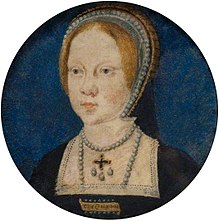
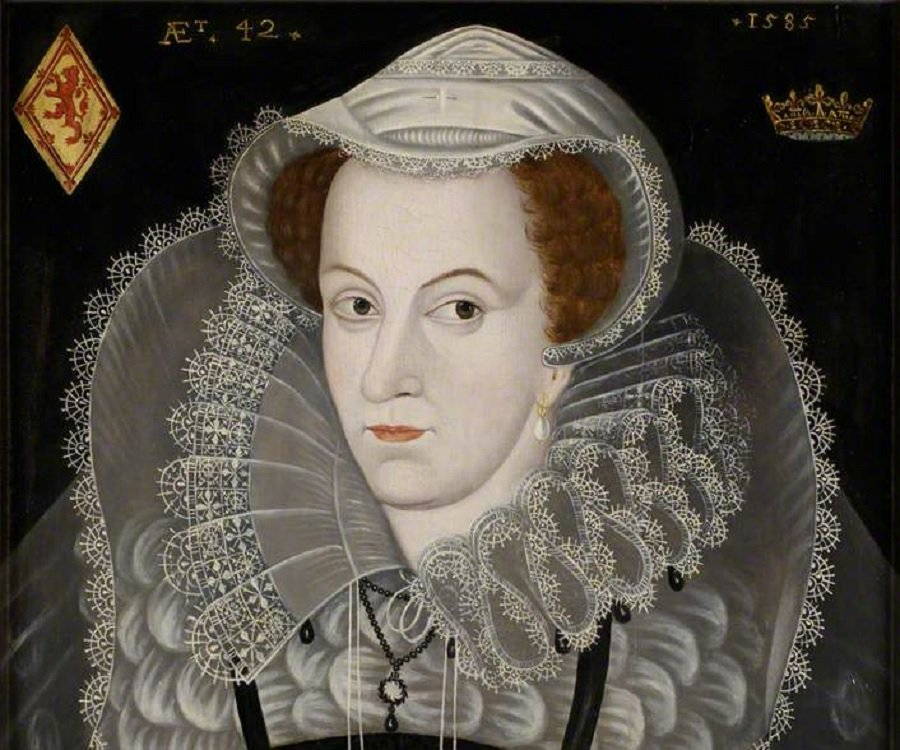

On the one hand, having a closer look at the societal model, it can be seen that a woman’s social status had a strong influence from their marriage. By investigating the story of the two women, Elizabeth Tudor, a virgin and the new Protestant queen of England, and Catherine de’ Medici, widowed in July 1559, they came to the throne and had the same kingdoms’ destinies, however, in different statuses. One is the virgin and the other is the widow. To Elizabeth, she was the last of her family has chosen not to marry, but view analytically she ruled alone, without family support and interference while Catherine “cleverly courted the goodwill of her father-in-law, Francis I”, and she had a son after ten years of barrenness which his presence thereafter caused her worrying of the power but once a widow she was regent and took advantage from it.[2] That is somewhat resourcefulness of the two women with the periodization. Their contradictory action had struck at the root of patriarchal ideology. Yet what Elizabeth could depict her power should go above any biases by the way she dealt with the pressures of matrimony, first with the Archduke Charles of Austria and then with Catherine’s sons. In terms of political practice, marriage negotiation could be taken into account when it came to peace promotion between nations, and religions.


To respond to intension of Saint Bartholomew’s Day massacre of August 24, 1572, Elizabeth sent a diplomatic instruction letter to Walsingham (her ambassador) to manifest her anger and sorrow reaction; also she opposed sending men’s assistance to the beleaguered protestants at La Rochelle and subsequently accepted to marry with Duke of Alençon who was the youngest son of Henry II of France and Catherine de’ Medici.[3] That might be a critical point in terms of historical context when marriage could mean whether her thought was backed up to marital status and thus her situation of lacking power. Nonetheless, Kruse argued, “marriage to Alençon would protect England from French aggression.”[4] Furthermore, Susan Papino’s Shifting Experiences: The Changing Role of Women in the Italian, Lowland, and German Regions of Western Europe from the Middle Ages to Early Modern Europe, published in 2006, he extracted a statement from scholar Jane Tibbetts Schulenburg’s work “Female Sanctity: Public and Private Roles, 500-1100” that “during…[the] the early period, in the absence of strong, impersonal governmental institutions, royal or aristocratic families assumed the political, economic, and social authority in various areas of Europe, and women were allowed to achieve positions of authority and control over wealth.”[5] The truth was that queenship had a tremendous effect on viewing Early Modern Europe’s history. Their roles were such an intended effect, which saved many lives of humankind from war. Especially both their ambitions and energies in reigning the dynasty embraced their reinforcement of mercy that could convert the social norms of women, promoted the women’s imagery, and therefore exercised a fascination for the society’s attitudes towards women and gave credit to the woman right in early modern Europe.

Saint Bartholomew’s Day massacre of August 24, 1572
On the other hand, the women power could be viewed by their matrimony role in early modern Europe. Marriage pattern was considered to take into account. This was because of the increasing Protestant movements that started from the queenship focused on female monarchs consisting of Elizabeth in England, Catherine de’ Medici and various queens in early modern Europe. Firstly, it changed the social disciplines. Before Reformation, male-headed bourgeois household kept the role of family settlement, which centralized “gendered ideas about men as workers and women as ‘helpmeets’ emerge in craft and journeymen’s guilds before they become part of Reformation ideology.”[6] Merry Wiesner-Hanks stated that “historians have looked at women defying their husbands in the name of their faith, preaching in city streets and shops, converting their husbands or other household members, creating a new ideal for women as pastor’ wives, and fighting in iconoclastic riots and religious wars.”[7] This could be a damaging blow to the patriarchal authority and recognized not to restrict sexuality to marriage and Church courts towards moral and sexual issues.
Secondly, women power could also be understood by the property that they owned. Normally, it was property inheritance when it came to marriage. There were several distinctive ways of transferring property between generations and within households. This could be based on regions that in the northwest Europe generations or husband and wife would inherit the property while western Europe the ability and the right of women could take over the property as inheritance or dowers.[8] Therefore, marriage played a significant role in the bulk of married women in the medieval period.

Thirdly, women’s domestic responsibilities were replaced by their economic role in market labour. As mentioned above to the Reformation ideology affected the gendered ideas in the social disciplines, however, there were still some restrictions to women’s economic activity and hold them back from high-status labour. Crowston stated the economic crisis in the late sixteenth century, the privileges of widows, wives, and daughters and forbade masters were limited from hiring female labourers due to new legislation of German guilds.[9] However, Howell concluded, “women only participated in high-status trades when production took place with the family context.”[10] That could really mean something because, under the masculine society and its patriarchy, women had a chance to act in economy provoking a good sign of right and in a certain extent that was probably considered as an act of legalizing a basic right for women to participate in socio-economic aspects.
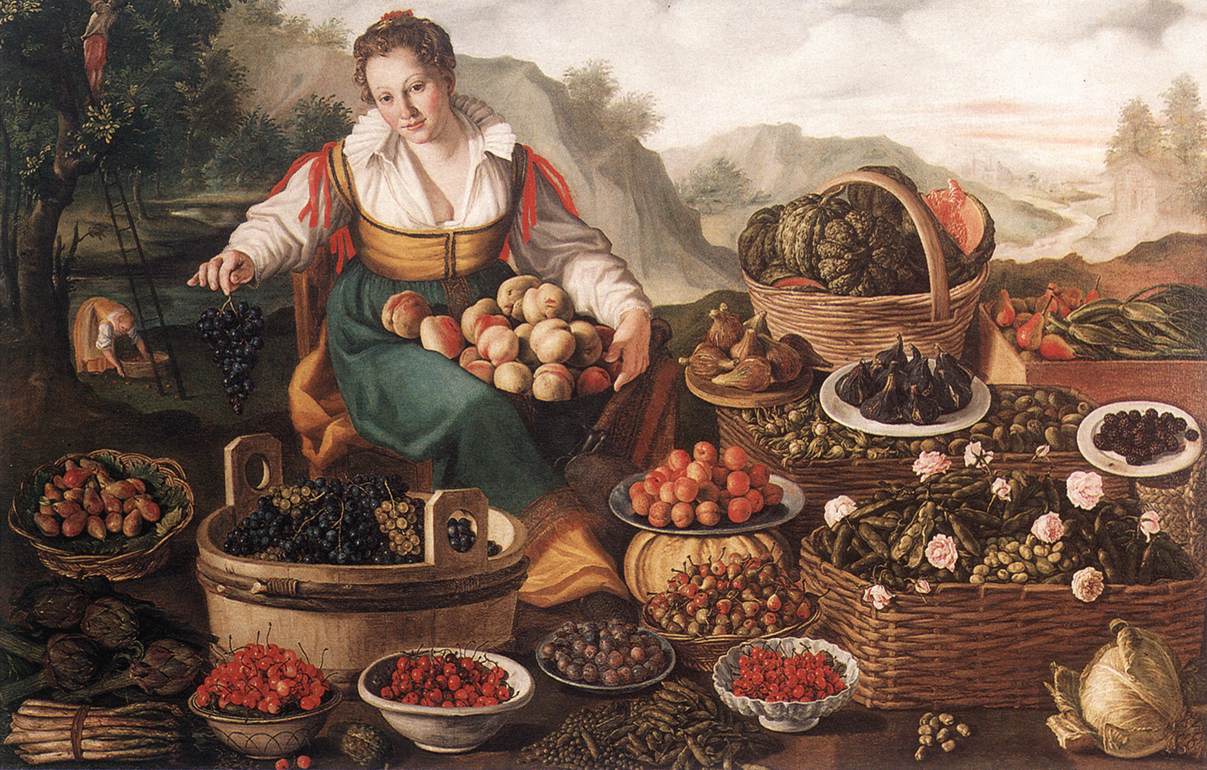
Lastly, viewed analytically, in response to the royal edict, especially in the period of Elizabeth of England, girls received vocational training and the royal government-sponsored their apprenticeship. A number of new female religious communities were established to continue poor girls’ education. According to Crowston, “the most important religious community was perhaps the Filles de Saint Agnès, created in 1678 in Saint-Eustache parish. By 1792, the community numbered 45 sisters, forty 40 adult boarders, 35 child boarders and almost 450 “poor children and external students for instruction and work.”[11] Although there were still restrictions against women into the high status workforce in trades and somehow they struggled social obstacles as well, in many same ways that men did, the Reformation promoted their apprenticeship and framed the notions of gendered labourers inappropriate workforce.
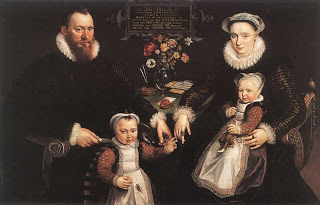
In conclusion, after many considerations of women’s role in early modern Europe, it is time to view the uncompromising quote of John Knox given in the introductory part. That the ways women practised power in the early modern period brought some really crucial meanings to the history of Early Modern Europe. The contribution of queens had a vast majority of achievements to negotiate historical conversations that staved people from ruinous war. From that perspective, it is probably necessary to investigate again Knox’s quote. The practices of “good order, of all equity and justice” women can and definitely have the right to try their hands in. To respond to the royal edict, the people especially women had opportunities in the ways of practising their importance in certain sectors of lives and ability to take over the positions of masculine work as well. Providing as women receive their appropriate rights, together people could thrive the lives of justice and equity.
Bibliography
Crowston, Clare. “Women, Gender, and Guilds in Early Modern Europe: an overview of recent research.” International review of social history 53, no. S16 (2008): 19-44.
The source provided not only some statistical data that showed a number of underprivileged women took a little role in classic rule but also surveyed the historiography on women, gender and the guilds over the past twenty years and investigated in the female trade aspects.
De Moor, Tine, and Jan Luiten Van Zanden. “Girl Power: The European Marriage Pattern and Labour Markets in the North Sea Region in the Late Medieval and Early Modern Period.” The Economic History Review, New Series, 63, no. 1 (2010): 1-33. http://www.jstor.org/stable/27771568.
The source contributed a vast majority of the knowledge in the North Sea on the marriage pattern which depicted the social status of women, and labour market which broadened the scope of women’s representation latitudes in the role of ‘transnation’ (women could practice in the workforce as men).
Levine, Carole and Bucholz, Robert. Queens and Power in Medieval and Early Modern England. (Lincoln: University of Nebraska Press, 2009), 127-128.
This source drew a critical point into the historical context that “Did women have a Renaissance?” and many intriguing concepts to religious ideas, men’s ideas and gender, and social discipline.
Jansen, Sharon L. The Monstrous Regiment of Women Female Rulers in Early Modern Europe. Queenship and Power. New York: Palgrave Macmillan, 2002.
Papino, Susan. “Shifting Experiences: The Changing Roles of Women in the Italian, Lowland, and German Regions of Western Europe from the Middle Ages to the Early Modern Period.” Senior Honors Projects (2006): 10.
Poska, Allyson M, Jane Couchman, and Katherine A. McIver, ed. The Ashgate Research Companion to Women and Gender in Early Modern Europe. Farnham, England: Ashgate, 2013.
This is a quite broad source which readers can gain knowledge differently from many perspectives affecting on women such as politics, economics, science, domestic images, and so on.
____________________________________________________________________________
[1] Sharon L. Jason, The Monstrous Regiment of Women Female Rulers in Early Modern Europe. Queenship and Power. (New York: Palgrave Macmillan, 2002), 1.
[2] Carole Levine and Robert Bucholz, Queens and Power in Medieval and Early Modern England. (Lincoln: University of Nebraska Press, 2009), 127-128.
[3] Levine and Bucholz, Queens and Power, 132-134.
[4] Levine and Bucholz, Queens and Power, 134.
[5] Susan Papino, “Shifting Experiences: The Changing Roles of Women in the Italian, Lowland, and German Regions of Western Europe from the Middle Ages to the Early Modern Period.” Senior Honors Projects (2006): 10.
[6] Jane Couchman, The Ashgate Research Companion to Women and Gender in Early Modern Europe (Farnham: Routledge, 2013), under “Protestant Movements,”http://site.ebrary.com.ezproxy2.acu.edu.au/lib/australiancathu/reader.action?docID=1066591
[7] Couchman, The Ashgate Research, under “Protestant Movements.”
[8] Tine De Moor and Jan Luiten Van Zanden, “Girl Power: The European Marriage Pattern and Labour Markets in the North Sea Region in the Late Medieval and Early Modern Period,” The Economic History Review, New Series, 63, no. 1 (2010): 1-33. http://www.jstor.org/stable/27771568.
[9] Clare Crowston, “Women, Gender, and Guilds in Early Modern Europe: An Overview of Recent Research,” International Review of Social History 53, no. S16 (01 December 2008): 19–44. doi:10.1017/S0020859008003593.
[10] Crowston, “Women,” 5.
[11] Crowston, “Women,” 17.
 The Digerati Politics