
Key words: US 2016 Presidential Election, US 2020 Presidential Election, micro-targeting, modern political campaigns, databases, digital media firms, Facebook, Russian meddling, Cambridge Analytica, human rights, democracy, clash of civilization
——————————————————————————————————————
The networked modern technology of micro-targeting purportedly employed in the 2016 US Presidential Election had entailed the win of the Republican candidate – Donald J. Trump. In a broadened context, the era of tremendous growth in the use of social media, increasingly data-driven campaigns have been deploying in social media platforms such as Facebook, Twitter or Reddit, where both political candidates and the public can exhibit their interests in order for calling voter registrations to their parties. Therefore, using micro-targeting and shifting its practices within political campaigns in the digital contextualization through the hybrid media environment require political communication to be delivered in a compatible and indispensable method to the public opinion targeting people’s attention to vote for a certain candidate via knowing voter identification, their contact and mobilization. In discussing the 2016 US Presidential Election, an analysis will take a closer look at how micro-targeting in the support of digital communication tools had been manipulated in ways to administer Trump’s victory in the 2016 Presidential Election under three spectrums, (1) defining micro targeting, (2) micro-targeting intervention and spending in Trump’s candidacy, (3) how micro-targeting governs people , (4) micro-targeting in relations with algorithm and data violence, and followed by a subsequent bulletin in the use of micro-targeting in the 2020 US Presidential Election.
What is political micro-targeting?

In the present consumerist society, information of who we are, what we buy, the music taste we like, what sorts of news areas we focus to read, even the connection we have,… they are being analysed into demographics, where users’ data collection by media companies help them to target and micro-target us to attract the use of media more and more. Politics is hence making use of these platforms more than ever in its history.
Political micro-targeting is defined as “typically involves monitoring people’s online behaviour, and using the collected data, sometimes enriched with other data, to display individually targeted political advertisements.” (Dobber et al., 2019) It moves from the tip of social media users’ privacy to their data in order for the measurements and analytics of data to impose an algorithm to categorize voter identification, and to mobilize its political strategy or tactics of attraction to vote for a certain candidate. Therefore, the more information that collected data political campaign companies have about a person, the deeper they know about you and get you engaged. In other words, “personalised data can tell campaigns about people’s political convictions and preferences, their personal beliefs, and their perception of candidate credibility.” (Madsen, 2019)
Micro-targeting interventions and spending used within Trump’s candidacy from 2015-2016
People hold different political opinions, but microtargeting political campaigns look at two things: where to invest and right time regardless who we are in online platforms. In terms of investment, what is shown in online Facebook ads can quickly and easily sway the nature of views without fact-checking. Where online platforms are, data stockpiles the content king (Big Data). The most present people almost gather on Facebook, their personal data is being managed by Facebook. According to Pew Research Centre (2019), there are seven-in-ten of adult Americans used platforms, where Facebook and Youtube have plateaued in their number of users accounted for 69% and 73% respectively. Given the American political exceptionalism and its centric phenomenon, the Internet penetration in each Presidential campaign relatively has a certain level of impact both in the US context and internationally with a roughly respective of 3.6 billion Internet users (Statista, 2020).
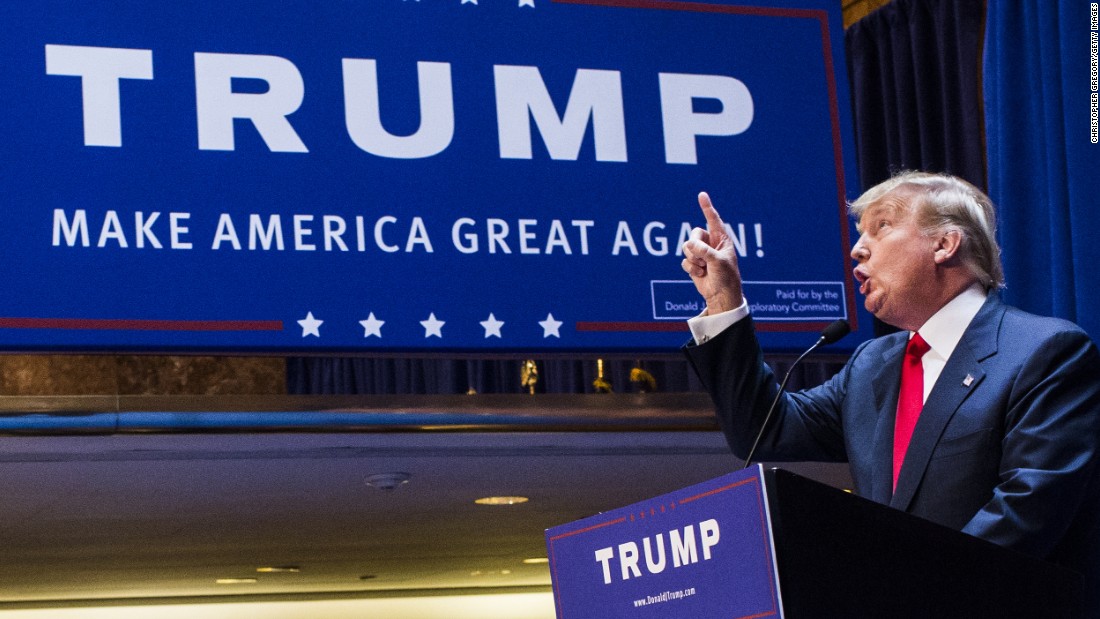
Trump’s 2016 Presidential campaign is inevitably upfront an integration with Facebook. In charge of Facebook advertising during the 2016 campaign, Facebook Exec Andrew Bosworth admitted that Facebook takes responsibility for the election of Trump, and furthered that the period of digital ad campaign has been “the single best digital ad campaign I’ve ever seen from any advertiser.” (Gilbert, 2020) Brad Parscale, Trump’s 2016 Digital Director, in an online interview the CBS News’ How Facebook ads helped elect Trump (2017), stated that the most spending on Facebook digital ads showed the high value of this platform, not only how the efficiency it shows but also reaching effective rural vote. He continued to exemplify “So now Facebook lets you get to…15 people in the Florida Panhandle that I would never buy a TV commercial for,” says Parscale. And people anywhere could be targeted with the messages they cared about. “Infrastructure…so I started making ads that showed the bridge crumbling…that’s micro targeting…I can find the 1,500 people in one town that care about infrastructure. Now, that might be a voter that normally votes Democrat,” he says.
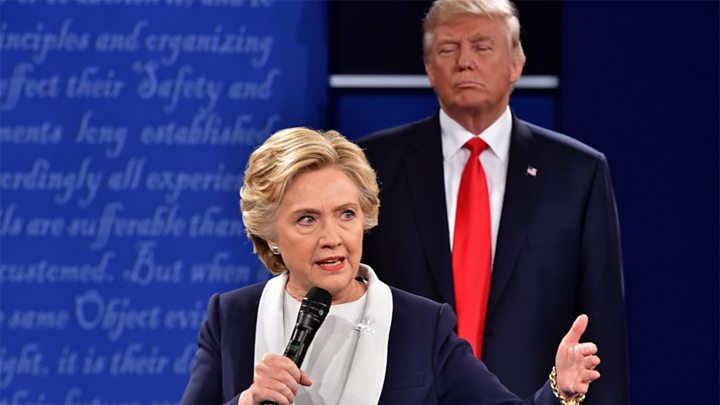
Looking at the finance campaign’s microtargeting of both 2016 Presidential candidates, according to the Federal Election Commission (2016), Hillary Clinton’s financial totals approximately accounted for US$ 585 million, compared to Donald Trump’s US$ 343 million roughly. Initially, the Trump campaign raised about $340m containing $66m out of his own pocket while the Clinton campaign longed a focus on fundraising, which later brought in about $581m, according to The Guardian (2016). However, when campaigns came to the near end, both candidates pushed spending. Especially, the final FEC report indicated a splurged extension in Trump’s campaign advertising activities reached nearly $39m on last-minute TV ads and about $29m on digital advertising and consulting work done by Pascale’s firm; in comparison with Clinton’s $72m on TV ads and about $16m on internet ads (The Guardian, 2016). This gives us an idea of micro-spending or micro-finance regarding one micro-targeting purpose.

In terms of right time, it is worth drawing in the affection of campaigning ads. It comes at the time of spending decisions’ empowerment and investing tactics of parties and political strategies. Decision targeted Northern states where the campaign and Republican party spent about $5m in get-out-the-vote digital advertising targeted in the final few days especially to Michigan, Pennsylvania and Wisconsin, where flipped one night election to win the White House (Montellaro, 2020). Soon then, Robby Mook, Mrs Clinton’s campaign manager, poignantly said that more campaign staff should have been placed after knowing Trump gained 11,000 voters here. (The Guardian, 2016). Evidence showed Hillary Clinton disbursed more for travelling to campaign while massively Facebook’s political advertising activities gauged big influence to swing voters and turnout vote. This also raises concerns about the flipped effect to come back in the 2020 US Election to most of us as well.
As mentioned, political consultants are specialist figures who are behind the scenes at a certain Presidential campaign. The tech giants can empower the results and Facebook can amplify the success of a President, but a massive expansion of the lobbying sector is the powerful credit to the President towards his/her success or failure. Figures like Paul Manafort, Charles Black and Roger Stone are in strings of modern political lobbyists, who are the character of ‘legal’ politics meddling, while to some it is peddling perhaps. Roger Stone, who was a political strategist in the election of Republican presidents Richard Nixon, Ronald Reagan, George H. W. Bush, and long-time associate with Donald Trump (he later fired Stone). In his book “The Making of the President 2016: How Donald Trump Orchestrated a Revolution”, Roger drumbeated his strategy to attack “the dishonest media” and explained to “pick something Trump said, even if the chosen statement were a side comment, that could be blown up into a controversy that would cost Trump days of media time to explain what he meant.” (cited by Murphey, 2017)

How micro-targeting governs people
Traditional journalistic news such as newspaper, television is increasingly gradually leaping the body of performance to adapt into a new longitude, cyberspace. The resurgence to integrate old media and new media is a necessity. This is which Dimitrova and Matthes’ studies (2018, p. 335) extended this perspective as “old wine in a new bottle” where traditional news consumed cohorts can observe themselves in a new digital platform of social media. The rapid technological development does not want to leave anyone behind. On one hand, this can give people a new way of experiencing digital tools like tablets, advanced smartphones, laptop types, and so one. On the other hand, influential new channels on the Internet can clash old views due to its uncensored news and opinions. That requires “individual-level media repertoires” (Dimitrova & Matthes, 2018, p. 336) to function themselves the same effect in a simply different channel. In another word, old platformed views cautiously mobilize to catch up and adapt to a new intensive data-driven world despite being clashed. Thus, they are being objective of the micro-targeting.

As an expressive nature, politics conundrum has been resolved. Where most people gathered space to consume news quickly, the designation of the networked social media character helps to build the means of political engagement with more targeted and micro-targeted news to call out people’s attention. That this as before traditional media channel were bluntly helpful, it is much easier to actively manipulate a widespread amount of news to people as such news information of when you need to vote early, mail-in vote, phone numbers to contact, even fortified volumes of news when it comes to get-out-the-vote or the 72 Hour Project. The idea of online micro-targeted campaigns has been stiffly blooming and can be seen, watched, and commented wherever they are, whoever they are and whatever ideology have. They can be targeted under the spectrum of political news campaign because sooner or later they still need to exercise their citizen rights – vote.

The micro-targeted campaigns allow politicians and Presidential candidates to participate in a more effective one-size-fit-all because it affects the psychographics of the crowds. In the book by Dennis W. Johnson (2016) Campaign in the 21st century: Activism, Big Data and Dark Money, micro-targeting has been used in the American politics for commercial used during the 1960s, and for political purposes from the 1970s began with pollster for President Jimmy Carter at “a very simple but not sophisticated” regarding electorate regional separation; pollster for President Bill Clinton’s 1996 re-election campaign through the “Soccer Mom” by sorting out identified groups of busy women who worried about the President practical policies in the safety sphere for their children from drug-testing in schools, ban teen smoking, school uniforms, and TV violence dis-incitements, to draw in the campaign promises to attract voters. The steady development of micro-targeting has scholarly been observed in Obama’s 2008 Presidential campaign, helping him to claim two victory terms. According to an article in Politico (Stokols & Schreckinger, 2016) Trump foreshadowed his presidential campaign strategy in December 2013 and the far-fetched announcement by him that he “is going to get in and all the polls are going to go crazy. I’m going to suck all the oxygen out of the room. I know how to work the media in a way that they will never take the lights off of me.” Sounded like an implausible plan but it did come true as we know.
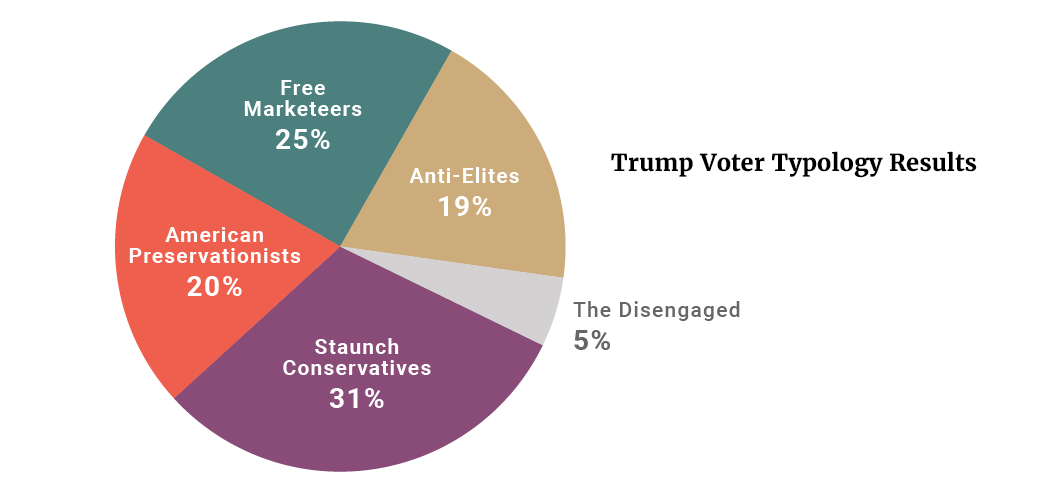
Surprisingly, actual impacts of micro-targeting led to the result of the 2016 election, a research report from The Democracy Fund Voter Study Group (Ekins, 2017) showed the Trump voter typology results varied amongst the statistical techniques but most of them are being clustered into five categories comprising of “31% of the Staunch Conservatives, 25% of the Free Marketeers, 20% of the American Preservationists, 19% of the Anti-Elites, and 5% of the Disengaged.”
Latest findings have shown that clustering fragmented Republican electorates to allow candidates to engage in hyper narrowcasting in contacting specific groups of voters and through the statistical analysis of polling data from key primary states to capture the occupying narrow political “lanes”, Republican contenders collectively weakened their chances of winning, thus allowing Donald Trump to secure the nomination (Turcotte & Raynauld, 2017) Not only vast in scale in the number of people being targeted, but also an analysis by Channel 4 News (2020) shows a Deterrence Project suppressed Black Americans to go out to vote in the 2016 Election, which has been historically distressed in the domain of democracy. In another research report, Griffin et al. (2017) found that “the biggest and arguably most important difference between the exit polls in our data indicate a vastly different story: white college graduates were only about 29 percent of voters, while their non-college-educated counterparts far outdistanced them at 45 percent of voters.”
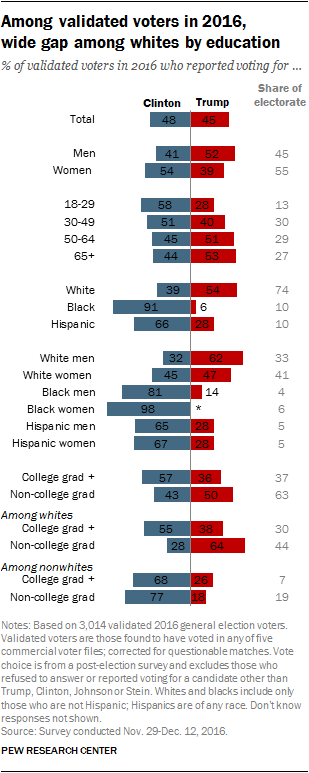
To most of the people who voted for Trump, they believed he can bring brighter change for their economic life and make serious differences to politician-liars and their promised non-accomplishments. This is because Trump’s background as a successful a flair for outsized successes, dramatic falls and tabloid attention as a real-estate mogul and reality TV star. In another word, he is a newcomer to this political field. At most of his rallies, he tried to claim a big lie of Obamacare, and never stopped repeatedly saying “I’ll bring back our jobs from China, from Mexico, from Japan, from so many places. I’ll bring back our jobs, and I’ll bring back our money.” (The American Presidency Project, 2015) Or his great motto “Make America Great Again. Being lacked politics educated, a money-talk-style man, should this be taken as a crucial point of the US political correctness flawed towards the so-called the micro-targeting in this Trump election? It is often believed to be a detrimental concern to the US politics and foreign policies as well.
Micro-targeting in relations with algorithm and data violence – 2020 US Presidential Election
“Micro-targeting is arguably amongst the most valuable new technologies in political campaigns.” (Strasma as cited in Johnson, 2016. p.79) The author also stated that “the data gleaned from micro-targeting techniques can be used for get-out-the-vote, persuasion targeting, message selection, and fundraising especially from small-donor groups.” (2018, p.79) However, micro-targeting cannot work without helpful media companies and lobbying interest groups. They are having people’s personalised data.

Thus, Trump’s digital political campaign is not new. However, it sees an intended promotion in the 2016 Presidential campaign, first from the money spending as analysed above. The second is unfettered after a concentration on the last-minute ads from Facebook in an integration with the Russian meddling, and the Cambridge Analytica throughout serial investigations from 2016 to 2019. Subsequently, Internet users during the 2016 Election period paddled the clash of micro-targeting news, which later swayed voting decisions.
Onto the dismantle of the 2016 Election result, a report from the House Judiciary Democrats Call for Emergency Hearings (2018) accused the interference of Russia with the US 2016 Presidential Election to influence vote rolls through data collected from 2015 and series of nefarious Russian trolls. In a report from The Independent (Bump, 2018), an estimate of 10 million people viewed Russians’ ads – and above 5 million Facebook users seen after the election was over while 440 thousand people were seen before election day. Furthermore, a report from the Office of the Director of the National Intelligence (2017) judged that “The Russian leadership invests significant resources in both foreign and domestic propaganda and places a premium on transmitting what it views as consistent, self-reinforcing narratives regarding its desires and redlines, whether on Ukraine, Syria, or relations with the United States.”
/cdn.vox-cdn.com/uploads/chorus_image/image/58836477/691906346.jpg.0.jpg)
Greater efficacy can be seen in the relation between Trump and the Cambridge Analytica firm about “corrupt officials and voter manipulation, as well as ill-begotten data of Facebook users that drove their micro-targeting practices.” (Stromer-Galley, 2019) During this period of 2016, digital media firms like Citigroup Inc., Facebook Inc., or Alphabet Inc.’s Google took a lot of advantages in customising the search engines in cooperation with political advertising (Mims, 2016). Cathy O’Neil, author of “Weapons of Math Destruction,” supposes obscured algorithms and a relinquishing control by coders make us worried about “how big data increases inequality and threatens democracy.” (cited by Mims, 2016)
For instance, days after the 2016 Presidential election, Facebook was confronted throughout an intensifying repercussion of stealing 50,000 users’ account in the 2016 Election. If without investigations, Internet users would not have known this fact. According to Bennett and Lyon (2019) pointed out that winning or losing an election will be ubiquitously assumed by the basic idea that “candidate or party has the better data on the preferences and behaviour of the electorate.” Therefore, there should be an urge of an essential monitoring form, which uses a fair algorithm to both demystifying and decoding the defied political micro-targeting and the voter analytics. This seriously raises concerns over the US cybersecurity contractor and the Russian propaganda by not assuring to disrupt the interference at the beginning from the Candidacy process to the Presidential campaign progress.
The recent Senate hearing, lawmakers questioned CEO Mark Zuckerberg about his company’s actions, “noting that Section 230 of the Communications Decency Act provides a freedom from liability to neutral platforms hosting speech.” (York, 2018) the quest of tech tools detecting the right of news then circulated into the “Code of Conduct” issue between the relation of lawsuits and human rights in freedom of expression belonging to the civil society language, and media companies’ algorithm structure to fight with fake news.

Conclusion
In light of the evolution of Presidential advertising, where political ads are becoming manipulated not only in our daily life but whenever political campaigns come at us, in an integration with huge effects from digital media firms, a data-driven life has been hauling people to cyber safety. The obliteration of information to similar news, false news, fake news is scaling our democracy, which it is inherently struggling in the physical battleground, and now being stalemated in the age of intensively digital and technological advancement. Micro-targeting is just a tricky and cheeky governing method used to measure the success of a President campaign. Nonetheless, the overlook of it in our future is somehow unpredictable due to technological companies are incessantly improving themselves regardless of the meanings of it. The 2020 US Presidential Election is happening right now. The strategy of micro-targeting will continue to function its abysmal algorithm testing activities by the social media firms, and ostensibly plausible wars of words in video-streaming on the Internet by politicians.
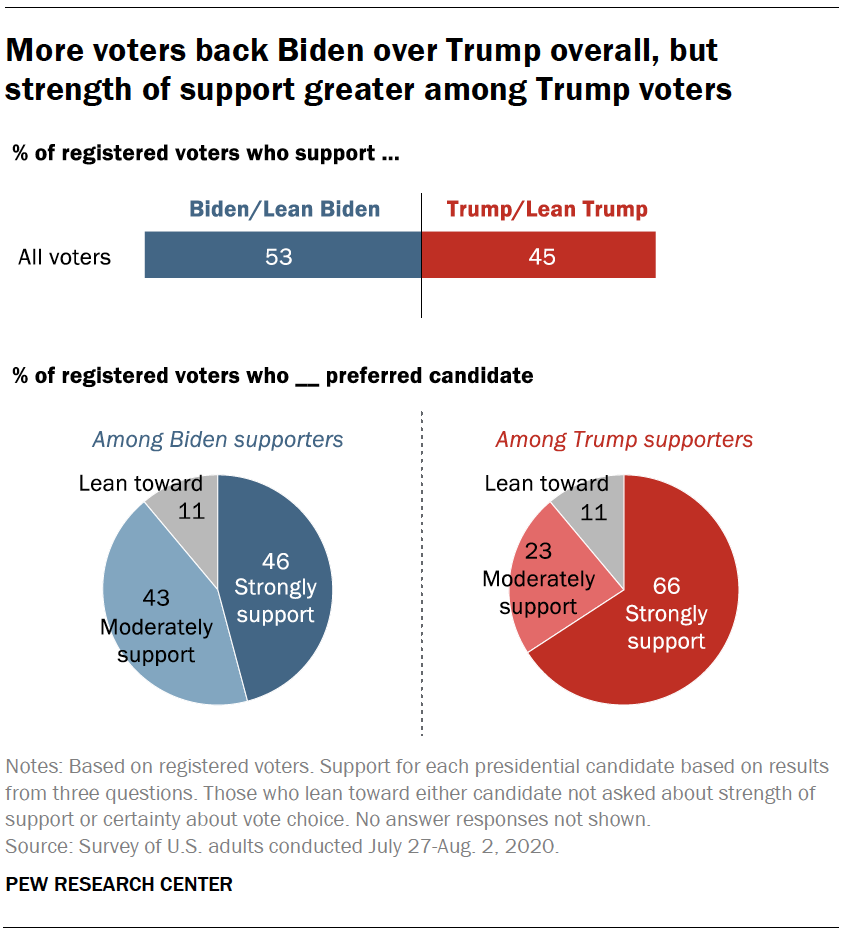
Micro-targeting in the huge controversies are kept blowing up. False news, fake news, misinformation, disinformation, Party politics, political polarization, political division in the age of Internet have torn down the greatness in the US democracy in this period of digitally political communication of micro-targeting. The online platform cannot count the money of one put into it, media coverage is floating their preeminent contents to attract readers, politics is hence utterly a giant in this battle because of its power to claim sovereignty. And the exact use of privacy towards people’s personalized data is in the bargain between media companies and those in power.
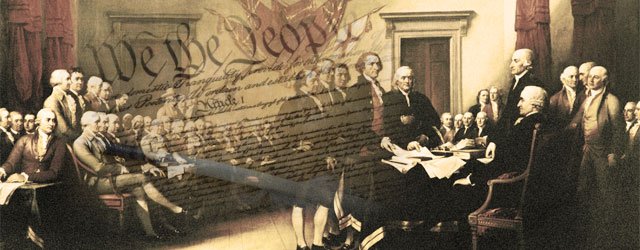
The moment of micro-targeting should be, without caring about the moments of political campaigns and avoiding the juggernaut, the moment we truly think about the micro-understanding of the human dignity bond, where truths speak and never fraudulently be (re)defined in light of justice. But a belief in the function of a good society always requests each of us to be challenged through dark times, a micro base of ideological divergent perspectives. As it is deeply tapped in the vein of our cultural politics to govern ourselves, to have a better life ourselves without being too pessimistic to receive things to come. I quote words of two American Founding Fathers:
——————————————————————————————————————
George Washington in his Farewell Address warned against “the baneful effects of the Spirit of Party; a conflict that would divide and potentially destroy the new nation,” as did his successor, John Adams, who argued that “a division of the republic into two great parties…is to be dreaded as the greatest political evil under our Constitution.”
—————————————————————————————————————-
Bibliography
Ballhaus, R. (2016). Donald Trump, Hillary Clinton Increase Spending as Campaigns Near End; Outlays on TV ads increase as contest enters final weeks. Wall Street Journal (Online), n/a. http://search.proquest.com/docview/1831054749/
Bennett, C. J. & Lyon, D. (2019). Data-driven elections: implications and challenges for democratic societies. Internet Policy Review, 8(4). DOI: 10.14763/2019.4.1433
Bump, P. (2018). How Donald Trump campaign used data scraped from Facebook to win presidency. The Independent. https://www.independent.co.uk/news/world/americas/facebook-scandal-latest-donald-trump-campaign-presidential-election-cambridge-analytica-steve-bannon-a8269706.html
Dimitrova, D. V., & Matthes, J. (2018). Social Media in Political Campaigning Around the World: Theoretical and Methodological Challenges. Journalism & Mass Communication Quarterly, 95(2), 333–342. https://doi.org/10.1177/1077699018770437
Dobber, T. & Ó Fathaigh, R. & Zuiderveen Borgesius, F. J. (2019). The regulation of online political micro-targeting in Europe. Internet Policy Review, 8(4). DOI: 10.14763/2019.4.1440
Donald Trump and Hillary Clinton’s final campaign spending revealed. ( 2016). The Guardian. https://www.theguardian.com/us-news/2016/dec/09/trump-and-clintons-final-campaign-spending-revealed
Federal Election Commission. (2016). Presidential committee reports. https://www.fec.gov/data/elections/president/2016/
Gilbert, B. (2020). Facebook is the reason Trump got elected, says Facebook exec who ran advertising during the 2016 election, ‘but not for the reasons anyone thinks.’ Business Insider. http://search.proquest.com/docview/2394944452/
Griffin R., Teixeira R., and Halpin J. (2017). ‘Voter Trends in 2016: A Final Examination.’ Center for American Progress. https://www.americanprogress.org/issues/democracy/reports/2017/11/01/441926/voter-trends-in-2016/
House Committee on The Judiciary. (2018). House Judiciary Democrats Call for Emergency Hearings after Administration Official Reveals Russia Hacked U.S. Voter Rolls in 2016. https://judiciary.house.gov/news/documentsingle.aspx?DocumentID=193
Johnson W. D. (2016). Campaigning in the Twenty-First Century: Activism, Big Data, and Dark Money. New York: Routledge. pp. 77-92.
Madsen, J. K. (2019). The psychology of micro-targeted election campaigns (1st ed. 2019.). Palgrave Macmillan.
Mims, C. (2016). How Facebook Is Dominating the 2016 Election; Social network’s vast reach and micro-targeting tools are manna for political advertisers. Wall Street Journal (Online), n/a. http://search.proquest.com/docview/1825035369/
Montellaro, Z. (2020). Michigan, Pennsylvania, and Wisconsin decided the 2016 election. We’ll have to wait on them in 2020. Politico. https://www.politico.com/news/2020/09/15/swing-states-election-vote-count-michigan-pennsylvania-wisconsin-414465
Murphey, D. (2017). The Making of the President 2016: How Donald Trump Orchestrated a Revolution [Review of The Making of the President 2016: How Donald Trump Orchestrated a Revolution]. The Journal of Social, Political, and Economic Studies, 42(2), 273–283. Council for Social and Economic Studies, Inc. http://search.proquest.com/docview/1922872590/
National Archives. (2020). Farewell Address, 19 September 1796. https://founders.archives.gov/documents/Washington/99-01-02-00963
National Archives. (2020). From John Adams to Jonathan Jackson, 2 October 1780. https://founders.archives.gov/documents/Adams/06-10-02-0113
Office of the Director of National Intelligence. (2017). Assessing Russian Activities and Intentions in Recent US Elections. https://www.dni.gov/files/documents/ICA_2017_01.pdf
Pew Research Center. (2019). Social media fact sheet. https://www.pewresearch.org/fact-tank/2019/04/10/share-of-u-s-adults-using-social-media-including-facebook-is-mostly-unchanged-since-2018/
Raynauld, V. & Turcotte, A. (2017). “Different Strokes for Different Folks”: Implications of Voter Micro-Targeting and Appeal in the Age of Donald Trump. In Gillies, J. (2018). Political Marketing in the 2016 U.S. Presidential Election. Springer International Publishing. https://doi.org/10.1007/978-3-319-59345-6
Statista. (2020). Number of social media users worldwide from 2017 to 2025. https://www.statista.com/statistics/278414/number-of-worldwide-social-network-users/#statisticContainer
Stokols E., & Schreckinger B. (2016). How Trump Did It. Politico. https://www.politico.com/magazine/story/2016/02/how-donald-trump-did-it-213581
Stromer-Galley, J. (2019). Presidential Campaigning in the Internet Age (2nd ed.). Oxford University Press. https://doi.org/10.1093/oso/9780190694043.001.0001
The American Presidency Project. (2015). Remarks Announcing Candidacy for President in New York City. https://www.presidency.ucsb.edu/documents/remarks-announcing-candidacy-for-president-new-york-city
York, J. (2018). Who elected facebook? New Internationalist, (513), 24+. https://link.gale.com/apps/doc/A541892740/AONE?u=acuni&sid=AONE&xid=7c2c882a
 The Digerati Politics
I’m still learning from you, but I’m making my way to the top as well. I absolutely liked reading all that is written on your website.Keep the posts coming. I liked it!
LikeLike
Hi, Preston Coressel! Nice comment! Thank you for your standing support! I will try my best to upload decent contents in the coming time! Have a great weekend!
LikeLike
Oh my goodness! Amazing article dude! Many thanks, However I am experiencing difficulties with your RSS. I don’t know the reason why I can’t join it. Is there anyone else having identical RSS issues? Anybody who knows the solution will you kindly respond? Thanks!!
LikeLike
Dear Alex. Thanks for your comment. I think there is a problem due to this web is unpaid customization. I am not sure which problem you are experiencing with specific RSS issue but I will surely watch out and keep editing for betterment. Thanks, heaps for your check-in! Cheers, Johnny
LikeLike
Hi, i read your blog from time to time and i own a similar one and i was just wondering if you get a lot of spam responses? If so how do you prevent it, any plugin or anything you can advise? I get so much lately it’s driving me mad so any support is very much appreciated.
LikeLike
Hi, James! Thanks for popping in! I am not sure because I am malpractice either. Have you tried to upgrade your plan? Cheers.
LikeLike
Aw, this was a very nice post. Finding the time and actual effort to generate a really good article… but what can I say… I procrastinate a lot and never manage to get anything done.
LikeLike
Howdy, i read your blog from time to time and i own a similar one and i was just curious if you get a lot of spam comments? If so how do you reduce it, any plugin or anything you can recommend? I get so much lately it’s driving me crazy so any support is very much appreciated.
LikeLike
I’d forever want to be update on new blog posts on this web site, saved to favorites! .
LikeLike
Magnificent site. A lot of helpful info here. I am sending it to
some buddies ans additionally sharing in delicious.
And certainly, thank you in your sweat!
LikeLike