
China’s currently remarkable consolidation of political power and the abolishment of the term limits for the president and vice president have emerged a massive consideration about China’s leadership amongst the world’s leadership and the rest of the world’s political critics. It is known that this is not the first time in history that China surprised the world in terms of political dimensions. It is, however, a correlation with the architecture of the Belt and Road Initiative, which is lying much on the behaviourism of China’s economic system at both domestic and international scale. Commenting on this, John Grady (2017, para. 1) stated that “Beijing’s Belt and Road Initiative is part and parcel of President Xi Jinping’s strategy to solidify China’s emergence as a great economic and military power.” While former Australia Prime Minister – Kevin Rudd (2018, para.1) wrote in his article “Kevin Rudd writes in Foreign Affair: How Xi Jinping views the world”, and described that Xi’s worldview prioritises the political ideology of the Chinese Communist Party (CCP) which has a great influence from Deng Xiaoping’s orthodoxy of “hide your strength, bide your time, never take the lead.” It can understand these perspectives like a leap into leading a unique Chinese nationalism, from which it demonstrates a kind of political nostalgia and political philosophy and state-crafting of an ancient China unity in world politics. In this writing, it is preferred to discuss Chinese politics in light of The Rights to Development and not to distinguish what right or wrong is in terms of the underlying political environment. Thus, there will be three main correlated aspects including Chinese Meritocracy, International Trade, and International Laws under the Rights to Development.
According to the Declaration on the Right to Development 1986, the United National General Assembly declared at Article 1.1
“The right to development is an inalienable human right by virtue of which every human person and all peoples are entitled to participate in, contribute to, and enjoy economic, social, cultural and political development, in which all human rights and fundamental freedoms can be fully realized.”
In order to make a clear understanding about the role of the state in this Charter, Article 4.1 fortified
“The duty of the states is to take step, individually and collectively, to formulate international development policies with a view to facilitating the full realisation of the right to development.”
The position of the declaration considered the context of its work. Thus all the aspects of the right to development set forth in both the present Declaration on the Right to Development 1986 and also the Universal Declaration of Human Rights 1948.

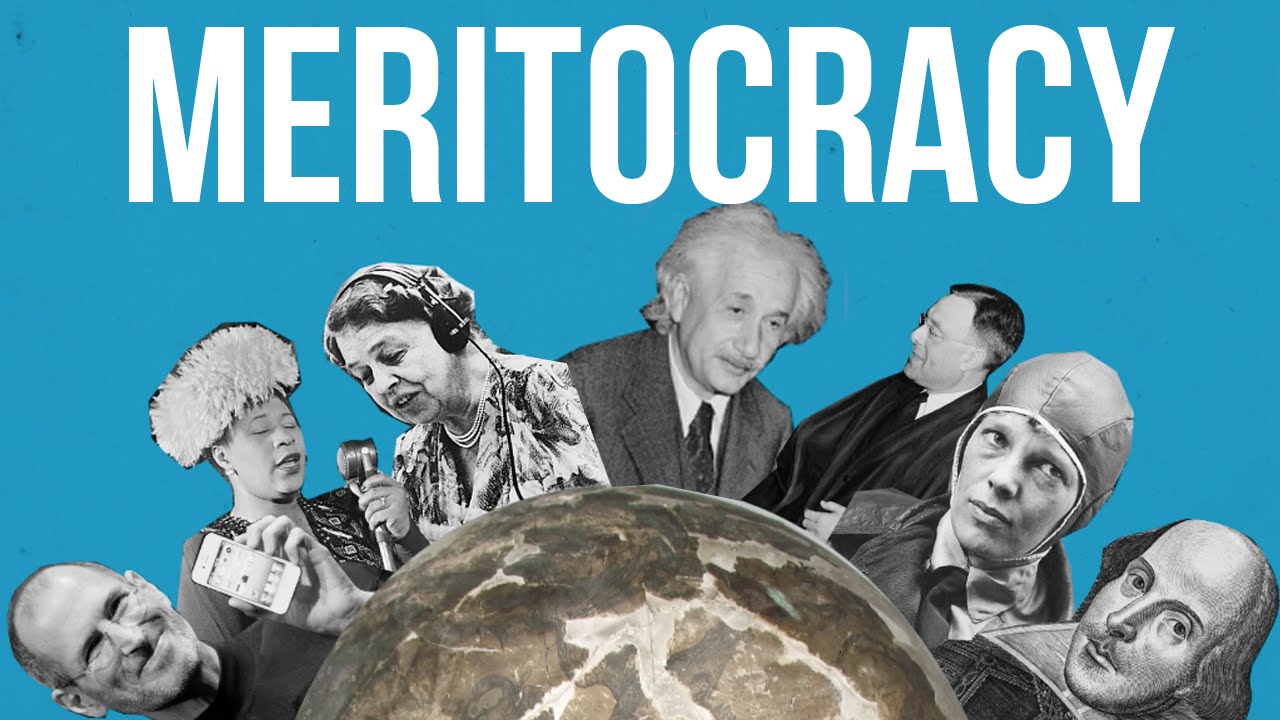
Firstly, Chinese meritocracy must be acknowledged as unique and interdependent from Western political styles and set forth to the state crafting of China’s leadership and suits the Declaration on the Rights to Development 1986. But why the rise of China makes the world worried about especially after the abolishment of term limits of the president and vice president? This may result in the opacity of its political system. In this aspect, the political philosopher Daniel A. Bell, who is the author of the book named The China Model: Political Meritocracy and the Limits of Democracy, in his article “Can Democracies Learn from China’s Meritocratic System?” explained political meritocracy is the idea that leaders of the country should be selected into the political system by their virtue and superior ability in the state-crafting. He also supposed
“By learning from aspects of imperfect meritocratic systems, including Chinese style political meritocracy, democratic systems can improve their performance and buttress their legitimacy.”

In experience, the voting culture in China is generally controversial but to this leadership, it is known that the selected leader must embrace his experience in the leadership from local authorities (communes) in different roles within many years and demonstrated his contributions by virtue and ability from this scale (state levels) before he is promoted and appropriately participates in the central government and other government sectors/bodies, and even the Central Committee or the Politburo (Federal level).

There is a correlation that can be seen from Machiavelli’s perspective. Niccolo Machiavelli was a 16th-century Florentine political philosopher and the author of many famous books including The Prince. Heinz-Gerhard Justenhoven (2016, p. 9) in “Aspects of China’s New Role in the Globalised World: Problems of International Politics” shorted that Machiavelli sheds light the moral principles of a political leader to protect the political community he heads and to act immorally against other states in order to protect his own state. If it stops here, everything seems to be distinguished and outstanding.
Notwithstanding the Machiavellism, he was realism in terms of the international relations that this is the one only self-centred to one nation and easily to build a wall to the international. That this is not globally contextually right today. In terms of local understanding, the way that the meritocratic leadership views to control the meaning of a virtue life on the one hand and makes the citizens believe that the right things that their government is doing and protecting them; but on the other hands this requires more and more pragmatic superior ability in the leadership, which has to be taking the international role. At this point, Dingding Chen (2014, para. 2) noted in a recent speech on the country’s regional diplomacy, China’s President Xi Jinping emphasized that this is the moment of more active adjust and providing “more leadership contributing to the world.” This is a new Xi and not Xi of Machiavelli anymore. This means the realism turns out and volumes up the theory of constructivism which international politics is shaped by convinced thoughts, universal values, and social and cultural identities. By this dilemma, this answers why Xi’s leadership under his term and now the abolished term is making a clear way for China development in regard of Rights to Development so as to introduce one nation of Meritocracy.
Secondly, the party apparatus over the administrative machinery of the state has been successfully asserted. The foreign affairs are the second target of the CCP to demonstrate the “active leading leaders” in world politics, especially through activities of International Trade. While it is recognised that the overview of the World Trade Organization (WTO) is to create the foundation of the multilateral trading system based on a number of simple and fundamental principles. However, the leading fact of it is the potential of production values makes each of the signatory different to join in this organization. This means underdeveloped countries, developing countries and developed countries. The current worldview of China’s trading activities and its relation with the United States remarkably has negative impacts on the global trading system, especially the tariffs.

Tariffing on several trading activities is not the new political strategy used by developed countries over the developing and underdeveloped countries in any reasons such as human rights abuse or economic sanctions,… Nonetheless, the early tariffs, which the US President Donald Trump signed in a couple of months ago to fight intellectual property theft and China was the pirate, are seen as the wrong weapon that the Trump administration battled. In Balancing International Trade (2018, para. 5) the author showed evidence that “the total foreign trade in China in the year 2017 was estimated to be $4.28 trillion which was an enormous increase from 1978 when the total international trade was estimated $21 billion. Through China’s rise, the world also gained in terms of cheaper goods, job creation, less poverty that were clear benefits.” The theory seems so much contended to how China benefits from this. Amongst large economic countries like the US, countries in the EU and Australia, products of China via the trading system are tremendous and accessible.

Firstly, it could be explained through the interconnected and globalised economic system, the conditions as analysed above as the potentials that a country can produce to the world. While China is expertise with cheap labours and cheap products because of its huge demographic of over 1.3 trillion people accounting for one-third of the world population. Thus the commodity and way of delivering to the market is not a thing with China. Chengxin Pan (2018, para. 6) questioned “Isn’t China’s market power part of the lure of the Chinese order?”, after illustrating examples from Norway and China in the bilateral trade relation hit record levels in 2016, and Australia and the surplus of largest trade with China,… In a variety of means, as few above numbers could also be taken into account to understand why China and cheap products and the resilience in its productions and manufactures are enough to make the name “product of China” lead the world’s markets. Thus it could end up the hegemonic order and become the world’s led-economic power. That is a theory, but in practice, it is not this kind of ideal.
As statistics by the World Economic Forum (2016), amongst 10 economies leading the world on trade, China’s name was not in the list, and on top of the number one was Singapore and tenth was Belgium. It is perhaps unable to be clear at this stage and much depends on the future of the world. However, in order to propose several reasons about this, which the world has been witnessing and talk a lot in face of newspapers, it is the control by the US and the rise of China economic power has to be delayed until the US Hegemonic Decline, and the militarization in the South China Sea and China’s Expanding Military might take a huge amount of budget away while China is still a developing country. Eventually, it seems that the International Trade allows China’s economic system to boost and dedicate the GDP and there are still tariffs, barriers and the self-centred regime of the CCP. Also, it rightly fits the Rights to Development and cannot uplift the chain of the economic powers of the world as China Dream.
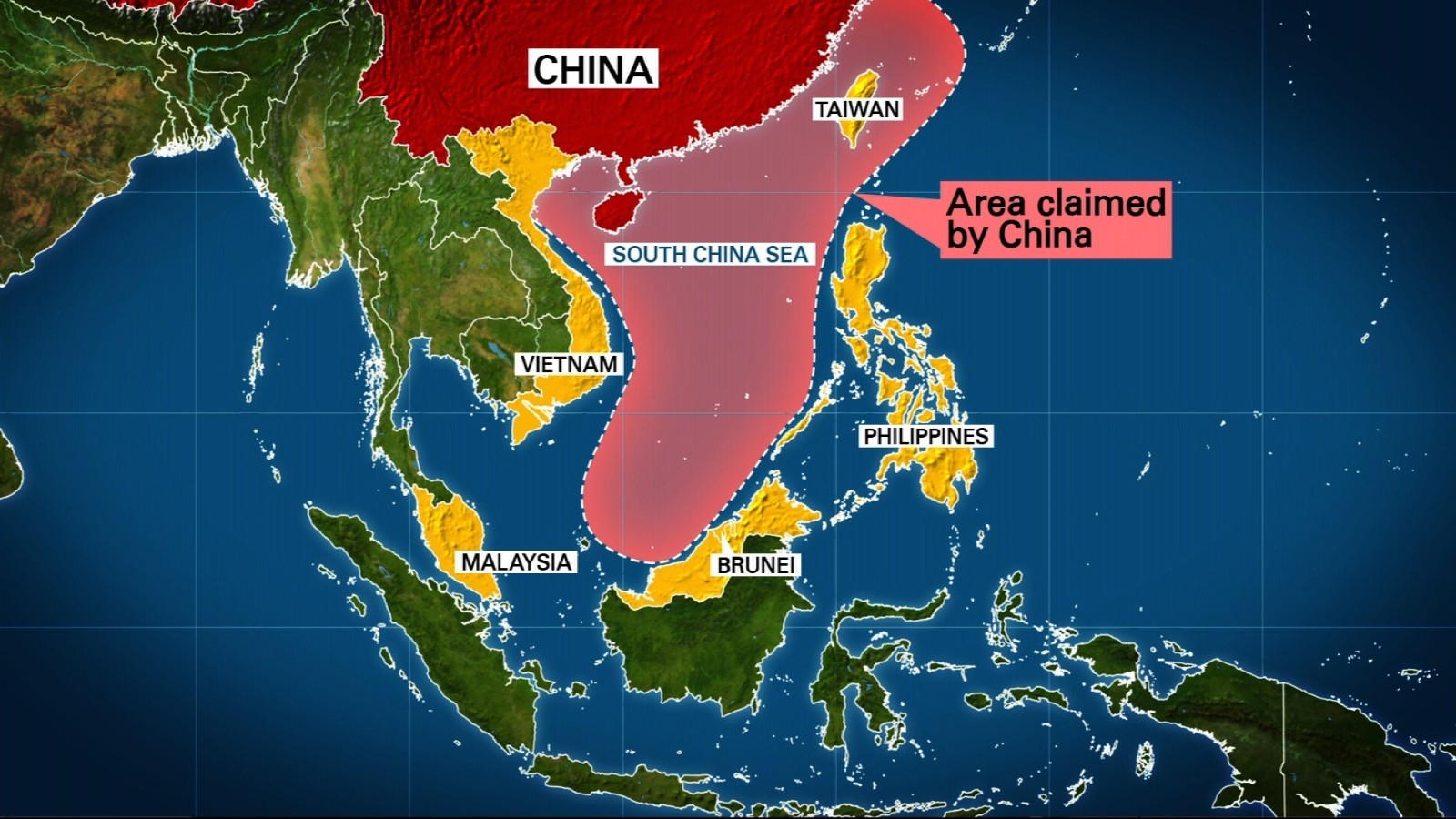
Lately, It is necessary to look at the International Laws to examine how much the process of China Dream has been violating human rights and detrimental to the Rights to Development. At a glance, it seems perfect with establishing a new term limit of the president and vice president of the CCP and meritocratic political system. However, civil rights are not respecting in China as demonstrations are blown out, activists such as Nobel Peace Prize Laureate Liu Xiaobo, Guo Feixiong and Ding Jiaxi. In terms of sovereignty, it is domestically problematic in the ongoing separatist conflict in Xinjiang and leading factors of religious war because of a number of Islamic demographic and Chinese populaces living in this areas and the populist thought of Xi Jinping’s New Silk Road Initiative to make a China unity. But it turns failure. Moreover, the militarised activities of the CCP in the South China Sea massively detrimental to the ASEAN relationship and the West too. It can be understood because of wanting to build its gateways to future infrastructures, planned economics, sea potentials and long life of an ambitious China. There are a number of examples that can tell to China’s rights violations in terms sea – the Hai Yang Shi You 981 in 2014 up to current, The Taiwan Strait Crisis 1995-95, the Tian’anmen Square incidents in 1989 and current nuclear reactors building near the South China Sea. In the light of development, the liberalisation of participation and opportunity for every nation to participate in the leading globalisation are integral and always being limited by treaties and laws and conventions that the world assures every single nation when joining the chain of the one world nation must take into account their obligations. Thus although China is building its tactic economic system the CCP should take a stance of the universal good for every other nation that they also embrace the rights to development as China.

Reference
10 economies leading the world on trade 2016, World Economic Forum, viewed 29 May 2018, < https://www.weforum.org/agenda/2016/11/top-10-global-enabling-trade-report-2016/>
Balancing International Trade 2018, Millennium Post, viewed 29 May 2018, < http://www.millenniumpost.in/opinion/balancing-international-trade-289468>
Bell, DA 2017, Can Democracies Learn from China’s Meritocratic System, Current History, vol. 116, p. 315-319
Chen, D 2014, The World Needs China’s Leadership, The Diplomat, viewed 29 May 2018, < https://thediplomat.com/2014/03/the-world-needs-chinas-leadership/>
Declaration on the Right to Development 1986, United Nations Human Rights Office of the High Commissioner, viewed 28 May 2019, <http://www.ohchr.org/EN/ProfessionalInterest/Pages/RightToDevelopment.aspx>
Grady, J 2017, Expert: Beijing’s Belt and Road Plan is About Building a New Chinese-led Order for the 21st Century, USNI New, viewed 28 May 2018, < https://news.usni.org/2017/08/03/expert-beijings-belt-road-plan-building-new-chinese-led-order-21st-century>
Justenhoven, HG 2016, ‘Peace through Law. Peaceful dispute settlement through comprehensive and compulsory international arbitration as an obligation of international politics’, in C Sun & HC Gunther (ed), Aspects of China’s New Role in the Globalised World: Problem of International Politics, Traugott Bautz Verlag, Nordhausen, p. 9-34.
Rudd, K 2018, Kevin Rudd Writes in Foreign Affairs: How Xi Jinping views the world, Kevin Rudd, viewed 28 May 2018, <http://kevinrudd.com/blog/2018/05/10/kevin-rudd-writes-in-foreign-affairs-how-xi-jinping-views-the-world/>
 The Digerati Politics
Aw, this was a really nice post. Taking a few minutes and actual effort to produce a superb article… but what can I say… I put things off a lot and don’t seem to get nearly anything done.
LikeLike
Hi are using WordPress for your site platform? I’m new to the blog world but I’m trying to get started and create my own. Do you need any coding knowledge to make your own blog? Any help would be really appreciated!
LikeLike
I enjoy examining and I believe this website got some genuinely useful stuff on it! .
LikeLike
We absolutely love your blog and find many of your
post’s to be just what I’m looking for. can you offer guest writers to write content to suit your needs?
I wouldn’t mind writing a post or elaborating on most
of the subjects you write regarding here.
Again, awesome website!
LikeLike