

Australia has a long-lasting democracy top ranking in the world over the past decade. However, it had unstable scores, which showed 9.09 in 2006, 9.22 within three years continually 2010-2012, then dropped to 9.01 in 2016 (The Economist Intelligent Unit, Fig. 3). Reasonably, this has caused controversies around the political operation amongst Australian politics and its relationship with the peoples. Whether the country has been more “presidential” leadership style, which appears to be considered as an inconsistent point in the democratic practice currently; or it still remains the pivotal element of responsible Cabinet government in the central role of the Australian Parliament. This document will examine this tension by two succinct aspects based on the understanding of the voting culture and the concept of globalization.

On the one hand, the reason for this political development can be explained through the voting culture. The Australian political system has been modelled as the Westminster system developed in the United Kingdom. Thus “voters are not asked to choose ahead of government (Premier or Prime Minister); they are asked to choose a Member of Parliament.” (Fenna et al. 14). In this case, the power belongs to the majority and divided and the government is responsible (a parliamentary system). While the presidential system specifies the responsibility of the president elected directly by the people and with powers over other political parties or branches (The Presidential System, par. 1). Notwithstanding this expectation, the practice of these two-political process can be varied in complicated ways. This means the PM can have power independently and become central, and the president power may be divided. In Australia, this issue of presidentialization occurred under Kevin Rudd leadership. Kefford supposed that this was reflected “compelling evidence of how Rudd interacted with the Labor Party, rather than his interaction with the executive or impact on voting behaviour.” (135) So, whether this presidentialization had precedences in the Australian political system or not, it showcases implied changes in the political process in Australia.
On the other hand, this political development might result in globalization. As mentioned, the implied change in the political process must have its arm from the past. If the Westminster model seems to have much influence to form the House of Representatives, the Washminter set a number of aspects in the Senate operation. This sounds a contradictory combination. However, in order to answer for the existence of executive government where the PM, the Cabinet, and the principle of responsible government, this sees a way of getting around the prerogative powers from he Governor-General (Fenna 21). Evidently, on the one hand, it can somewhat erode the national interest of sovereignty and ability of the government, but it represents freedom of identity and other respectable aspects of a country with its own political performance and determinations once the globalization passed this sort of right to nations in a global world.
In brief, in terms of political context, this creates a distinctively political practice. Its development lies in the future, while Australian democracy ranking obviously marks a significant achievement in the real world of politics.
______________________________________________________
Despite belonging to the top ten, the ranking of the Australian democratic system has fluctuated over the past decade. Certainly, the health of liberal democracy has obscured to some extent. Through statistics, Democracy Index showed that Australia downgraded one rank from 9th to 10th in 2016 (The Economist Intelligent Unit, Fig. 3). In the real world, current observations see from newspapers’ headline involved with terms like Parliament, Liberals, Coalition, Labor, the rise of One Nation, Equal Marriage, Citizenship, Dual citizenship, Adani, Aboriginal and Torres Strait Islander people, and so on. Instead of witnessing positive actions or changes, these issues amongst Australian societies turn out hot topics to debate, to argue, or to distinguish from right or wrong definitely. In this essay, the understanding of this change in Australian liberal democracy will be examined by an outside viewer through three questions such why Australia lets this recession happen among Australian societies, How the government can control those controversial contemporary issues, and What Australian citizens can do to make great contributions as much as their reputed liberal democracy ranking on the top of the world.

Firstly, as mentioned, Australia’s recession in the health of its political system has been a darkling point to the liberal democratic system and reasoned by the fault in ways of operating the leadership. This is due to two factors of the Australian political system comprising of liberalism and democracy – the twin goals. However, historical origins marked the coexist in the Australian system between the Westminster from the UK and the Washminster from the US. Commenting on this, Fenna supposed that this is as a “hybrid” and “potentially disparate elements” in understanding the Australian system of government. (13) In practice, the form of the Australian government is viewed that Cabinet and the Prime Minister derived from the Westminster system, while the Senate with a set number of members from each state derived from the federal Washington system. Two different operations in the liberalism and democracy, this may result in partisanships. When it is not individual liberalism anymore, the group of benefits or vice-versa turns out to uphold the game. For examples, One Nation can create its own policies one a web-page under the name of its leader Pauline Hanson’s One Nation with the slogan “Never give up, we won’t”, and she can have a lot of people or members followed her leadership and of course the political ideologies inherently. In the same comparison, others (like the Green, the Conservatives, the Labor,..) have this sort of operation in their own political ideologies too. Eventually, the harsh role throws to the head of the government, the power of the Prime Minister and the Parliament are now being challenged.
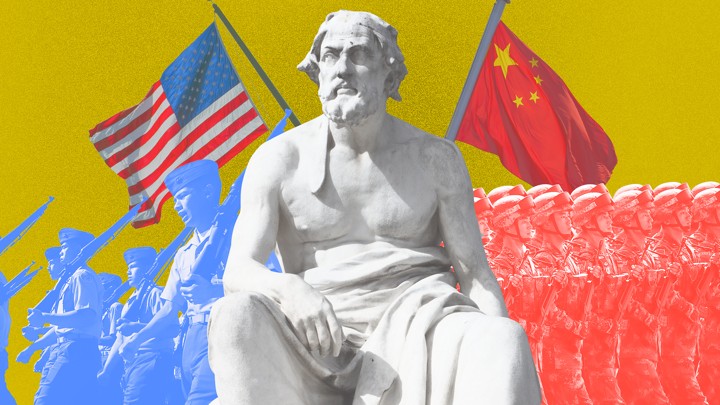
Secondly, When the role of responsible parliamentary government is responsible party government are challenged to control, it is time to question the responsibility of the Australian government. At glance, both Australia and the United States can somehow share similar government system but Australia is a constitutional monarchy while the US is a republic. Taking the Bill of Rights issue as a typical example. The president of the US can command and sign or not sign a bill of right. Then he or she is the executive power and is part of the legislative branch. Whilst the parliamentary political system needs to work well between the Cabinet and the PM leadership and thus the PM has no arbitrary in this game. In this reason, the head of state can somehow influence other political parties by working through the majority of parliament acceptance on any particular issue. In the Australian Constitution, Section 51 grants legislative powers to the Parliament only when subject to the constitution, and alongside 39 subsections which describe a “head of power” under which the Parliament has the power to make laws; whilst “the Commonwealth legislative power is limited to that granted in the Constitution, and powers not included in section 51 are consider residual powers, and remain the domain of the states, unless there is another grant of constitutional power.” In this respect, the role of the head of state is not central and only can deal with or interfere with any related political issues through special grants.
Lastly, the democratic element is thus seen significant success in the Australian political system because the power is not central to anyone, even the head of the government as analysed above. The citizens are not, in turn, to speak up their soft power, which considers here the rights of Australian citizens. It is the right to vote to choose their representatives. Through the voting culture in Australia, it can see as indirect votes, and not like the US or presidential vote. However, voters must be adequately knowledgable when it comes to elections. This is an acute and absolute opportunity for themselves to position their party they will belong to, the voting culture they will define, and they will not be influenced by media.
Work Cited:
“Explore the Democracy Index Results 2006 – 2016.” The Economist Intelligent Unit, https://www.eiu.com/topic/democracy-index
Fenna, Allan, Robbins, Jane and John Summers. “Liberal-democratic government in Australia”, Government and Politics in Australia, Pearson Australia, 2014, pp. 3-10.
Fenna, Allan, Robbins, Jane and John Summers. “The Australian system of government”, Government and Politics in Australia, Pearson Australia, 2014, pp. 12-28.
“What is the Presidential System?” The Presidential System, https://presidentialsystem.org/2016/04/30/what-is-the-presidential-system/
Kefford, Glenn. “The Presidentialisation of Australian Politics? Kevin Rudd’s Leadership of the Australian Labor Party.” Australian Journal of Political Science, vol. 48, no. 2, June 2013, pp. 135-146.
 The Digerati Politics
Very good article! We are linking to this particularly great post on our website. Keep up the good writing.
LikeLike
I’m not sure exactly why but this weblog is loading incredibly slow for me. Is anyone else having this issue or is it a issue on my end? I’ll check back later on and see if the problem still exists.
LikeLike
Sweet web site, super layout, rattling clean and utilise genial.
LikeLike
I’d like to find out more? I’d care to find out
some additional information.
LikeLike