

Source https://www.military.com/benefits/veterans-health-care/agent-orange.html
It is often believed that since the Cold War came to the end, the concept of security was being bloomed during the late 1970s till the 1990s as militarisation. This continues in most parts of the security discourse that considerably defines what security means. However, critics alongside wars and problematic security issues are being expected to have both intrinsic and extrinsic interpretations. Should it be named merely as militarised actions amongst states? Should it be broadened as existential big threats to something which can be so-called highly valued to a group of people? Buzan and Wæve (2016, p. 418) supposed that the reshaped discipline of the whole field of security gained increased attention. These two authors also aimed at the management and development of security due to “a lively discussion” into the subsets of recent security approach Critical Security Studies, feminism, the Copenhagen School, the Paris School, and the merits of traditional security theories; especially after the augmented attraction supported by the ‘global war on terror’ and ‘climate security’ (Buzan & Wæve 2016, p. 418). Other scholars like Dalby (cited in Williams & Krause 1997, p. 17) concluded three major issues posed in the security dilemma beyond the Cold War military-oriented parameters, which considered many difficulties in both security analysis and policy, including economic competition, the drug trade, and environmental degradation. In certain, Collins (2016, p. 2) assumed “the prevalence of threats is sufficiently far-reaching for Security Studies to encompass dangers that range from pandemics such as HIV.AIDS, and environmental degradation…” It is remarkable that the stagnated and related security issue of environment has been appealed to be seen as a security risk. Nonetheless, in the political discourse, it remains a controversial issue because of “the implications of the word security with it.” (Trombetta 2008, p. 587) In this article, there will be investigations to agree that it is important to seriously take the environment for granted in the security studies. Part one is to discuss why the environment is not being concerned about security studies. Part two will look at how natural resources and the environment contribute to or amplify armed conflict and violence. Part three is to fortify which natural resources and the environment support peacebuilding and reconstruction in international security.

More at http://www.taru.co.in/index.php?r=pages/index&id=27
Firstly, it is aforementioned about the controversial issue concerning environmental security or climate security whether or not it should be included in the security studies. In viewing the question “why” with the environmental issue as essentially contested security concept, it is necessary to review some of the International Relations (IR) theories and their connection with security studies. In terms of Realism, Glaser (cited in Collins 2016, p. 14) aggressed that it is defined in popular and elite discourse most frequently to refer “arguments that give priority to states’ national interests and their military and economic power, and thus it is less weight in accordance with the international norms.” In interpreting the concept of it with environmental security issue, Trombetta (2008, p. 587) supposed that the state has the objective referent of Realism as the strengthened force, therefore “Realists tend to consider environmental problems as belonging to the realm of ‘low’ politics rather than an issue of ‘high’ politics, such as security.” In addition, Lacy (2005) pointed out the network of Realism works constructs a hierarchy of legitimate and illegitimate dangers and threats and decides precautionary principle by which the people what and how to respond to them. Notwithstanding the school of thought by Realists, Constructivists and Poststructuralists opposed the major concept in Realism. Trombetta (2008, p. 587) also added thoughtful concerns about environmental threats as they are even socially constructed under the ongoing analysis elaborated by the Copenhagen School and its broadening environmental and security agenda. Especially, in terms of Critical Security Studies and the emancipation to traditional security studies and the necessity of bringing environmental security included in security studies as non-traditional security issues evolved post-Cold War. Collins (2016, p. 8-9) wanted to increase this issue into the non-traditional security issue as its prominences over the energy demand not only for states (and people), but also the global concerns as “a complex nexus of geopolitical, economic, and strategic concerns linked together distant regions of the globe” in the same shared security issue of the earth environment.

Source http://www.globalaffairs.com.pk/tackling-the-growing-prospect-of-environmental-security/
Besides, Vogler (cited in Owens et al. 2008, p. 361) stated that “unlike the ozone layer problem, climate change and the enhanced greenhouse effect had long been debated amongst scientists and serious disagreements over the likelihood by the human-induced changes.” While Buzan et al. (2005, p.91) concluded that “environmental conflict often travels under the guise of political turmoil or ethical strife.” With that in mind, it is often believed by the perception, as mentioned, of a group of people to highly-valued certainty then existential threats will be seen as factual that can physically and emotionally feel. However, this is seemingly seen as seriously adverse to the central environmental issue and its securitizing concept. The Intergovernmental Panel on Climate Change (IPCC 2018) on the special finalised report in October 2018 at its 44th Session, approved “the outline of Global Warming of 1.5 °C, an IPCC special report on the impacts of global warming of 1.5 °C above pre-industrial levels and related global greenhouse gas emission pathways, in the context of strengthening the global response to the threat of climate change, sustainable development, and efforts to eradicate poverty.” Albeit to the central controversies amongst the IR’s different schools of thought, Buzan et al. (1998, p. 91) clearly accepted the climate security and stated that “the political power of that community, however, is limited, which results in the needs to distinguish two agenda: the scientific agenda of the environment epistemic community and a political one of how this agenda is accepted as high politics and public spheres and transnational cooperation.”

Source http://econews.com.au/1452/environmental-security-worth-the-risk/
Secondly, moving on to the conditions of the environmental security or climate security, questions on how natural resources and the environment contribute to or amplify armed conflict and violence, are answers to the necessity of environmental security. Looking on the six key interpretation of environmental security, Barnett (cited in Collins 2016, p. 234) listed the family including ecological security, common security, environmental violence, national security, greening defence, and human security. Each of these interpretations has its own major source of risk, which the author respectively named as a human activity, environmental change, war, environmental change, green/peace groups, and environmental change. It can be seen that the majority of the associated risks are from environmental change, which demonstrates a lingered issue of environmental security amongst human living manipulation supposedly. In recognising the human activities powerfully changing the biosphere, Dalby (cited by Barnett in Collins 2016, p. 234) extends the notion of ecological security into the family of environmental security. It is now viable to link the environmental impacts of armed forces. An example of nuclear and Barnet (cited in Collins 2016, p. 235) listed evidence shown that the US nuclear weapons programme covered 2.4 million acres of land with the clean-up costs expected about $US200-300 billion; nuclear tests carried in seven sites of the South Pacific have made uninhabitable land and caused cancer risks for Marshall Islands’ residents; or the former Soviet Union dumped up to 17,000 containers of nuclear waste and up to 21 nuclear reactors into the Barents and Kara seas, and so on. This may be far-reaching onto the main concern. However, nuclear weapons and waste and reactors are from mining exploitations and taking over the landscape where people from generations are living in, or even areas without people but the ecosystem and/or related ecological security at all levels. In addition, Barnett (cited in Collins 2016, p. 236) also supposed one factor outside of the political reviews, which are population growth and its links to environmental degradation and subsequent conflict too. The population growth and migration can be seen as a correlation with the environmental security family mentioned above and especially human security. This means one thing that more people need more consumptions of natural resources for food, fuel, and shelter. In contrast, it also produces a high level of carbon dioxide’s emission. From this analysis, Homer-Dixon and Baechler (cited by Barnett in Collins 2016, p. 236) stated: “those correlated environmental changes are not an immediate cause of conflict, but they can at times be an exacerbating factor.” Having said that, this can be seen as an intrinsic response to the question “why” in part one, as its long-standing effects rather than the now. Moreover, another factor in the environment is natural disasters. It is often believed that natural disasters link with the marginalization of local populations, and results in internal conflicts or displacements due to the failure of economic benefit.
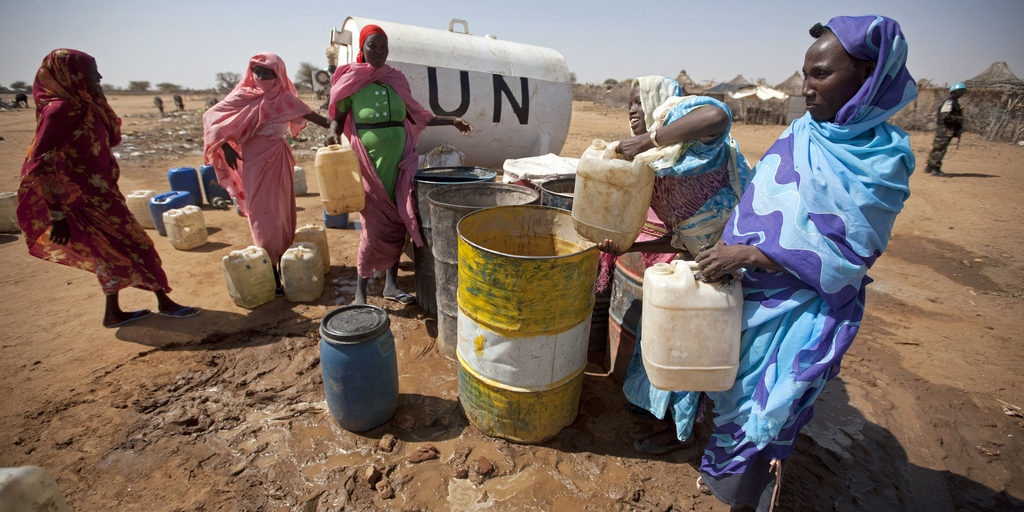
Agreed by Barnett (cited in Collins 2016, 236), these two factors (population growth and natural disasters) are common findings where environment scarcity will be always a factual relation with violent conflicts more likely in “low-income resource-dependent societies.” Report from the Environmental Literacy Council (2015, para. 5) demonstrated that a number of violent conflicts have erupted, in four African countries: Sierra Leone, Congo, Liberia, and Angola, over the abundance of resources. It has fuelled ongoing conflict, even experienced horrific civil wars in recent decades for lucrative mineral resources – oil, diamonds, and other strategically important minerals. Eventually “all have been devastated by warfare due primarily to predatory governing elites using their control over the resources to enrich themselves and outfit armies used to maintain their command.” Subsequently, these imply with an ideal prospect of confronting the menace of armed conflicts and violence towards natural resources and the environment, especially the center of environmental security.
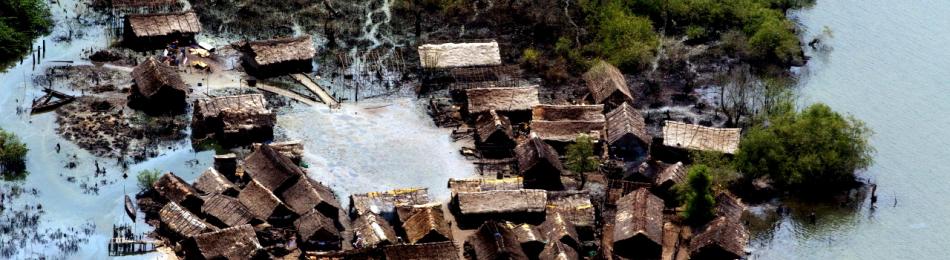
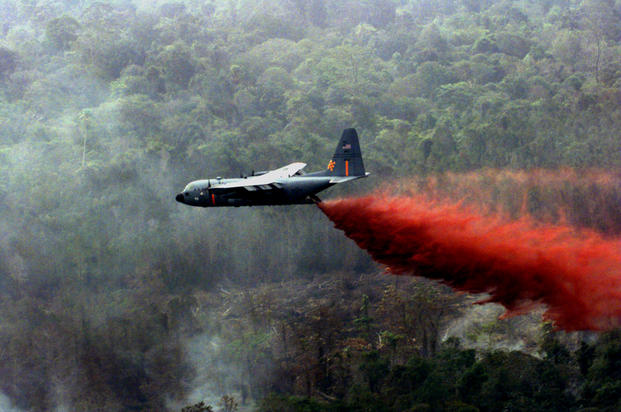
In the report From Conflict to Peacebuilding (UNEP 2009, p. 15), it addressed three types of impacts of conflict on the environment comprising of direct impacts, indirect impacts and institutional impacts. The direct impacts are referred to “the physical destruction of ecosystems and wildlife or the release of polluting and hazardous substances into the natural environment during the conflict.” There are two best evidence seen as the world lessons on environmental destruction and had detrimental to both the human societies and the environment itself more than natural calamities, which are nearly 72 million litres, 47 of the dioxin-containing defoliant Agent Orange were sprayed over the country’s forests, resulting in entire areas being stripped of all vegetation during the Vietnam war (UNEP 2009, p. 15); and the nuclear bomb tests eliminated Hiroshima and Nagasaki in Japan. They were from wars and they started from wars because of lack of understanding about the atrocity of insecurity onto the environment, because “security is about survival, urgency and emergency.” (Trombetta 2008, p. 588) Thus it led to the unsecured ability to protect the environment, from where humans live in. About indirect impacts, vulnerable populations are unable to survive the socio-economic disruption and loss of basic services caused by conflict. This often entails the winding up of natural assets for immediate survival income, or the overuse of marginal areas according to UNEP (2009, p. 15). These normally create environment damages, which are followed by disruption of agriculture, scarcity of food, or loss the natural resources can also result in zero supply for energy purposes. Taking the Kosovo conflict as a typical example, the UNEP report (2009, p. 16) concluded that various sites identified contamination and indicated serious industrial deficiencies in the pollution control of hazardous waste by the use of depleted uranium weapons highly cost the storage, urgent clean-up, and reconstruction process after The Pancevo industrial complex in Serbia was bombed ten separate times during the Kosovo conflict in 1999. Lately, the institutional impacts include conflict due to poor management or weak governance, lack of investment, illegality, and the collapse of positive environmental practices (UNEP 2009, p. 16). This leads to the situation of being unable to introduce the solutions for the outbreaks of environmental issues related to different natural disasters. For example, the government is failed to support enough clean water after flooding, or quality of shelter and adequate food for a number of people living in the flooded areas. Thus, these are major complexities in understanding environmental security, which has been offered by these situations as to see it has to be part of the security studies to protect the human lives and the shared environment for the globe.

More at https://www.stimson.org/programs/environmental-security
Lastly, natural resources and environmental security studies help to support peacebuilding and reconstruction in international security. It is known why and what environmental changes can affect our human lives. Once the risks are identified, there should be manageable projects toward saving natural resources and the environment, so that other issues such as economics, conflicts, sustainable development will be assessed in the peace of equal resources for all. This is to promote and to strengthen the international security and to manage it at local, national and global/ international levels. In the second part, environmental change has been addressed as human impacts. Thus it has to create the mission to tackle the contested even so-called a concept or a debate. According to Floyd (2008, p. 59), there are three ways in making peaceful approaches for the environmental corporation including increasing the possibility of environmental cooperation in the environmental conflict areas, dialogues between environmental conflicting governments, and developing thesis on sustainable development. While Buzan et al. (1998, p. 92) supposed that “some subsystemic formations do emerge, regional as well as nonterritorial, most successful securitization, however, is local.” In addition, the UNEP (2009, p. 19) reported three ways for peacekeeping due to the nature of peace settlement: supporting economic recovery, developing sustainable livelihoods, and contributing to the dialogue, cooperation and confidence-building. This respectively means that the management of economic should be the viable method to settle down conflicts, sustainable livelihood approaches is a framework for long-lasting stability of the people to continue living not only in the land but also resiliently to develop an economic recovery and stop conflicts and the environmental exploitations; and creating the space to facilitating national and local dialogue in ways that rebuild the bonds of trust, confidence and cooperation between affected parties is an immediate post-conflict task. Therefore, environmental issue such as global warming, sustainable manner towards a sustainable environment and development are equally important in order to peacebuilding and reconstruction through substantial benefits of environmental development in the understanding of security.

Source https://eyvor.org/category/environmental-security-corporate-strategy/
In conclusion, there have been theoretical approaches from International Relations to Security Studies analysed to discuss the agreement of environmental security. Despite its contested to critical security studies based on different schools of thought from traditional security studies to non-traditional security studies, it is trustworthy to both look into the details of scientific facts and its interpretations of environment issues, and the implications of scholar works in Security Studies in order to have true understanding about the causes and consequences of environmental security and its family at this time in the adolescent years of the twenty-first century; or in other words, it is better looked to both empirical projections and the degree of urgency. The number of associated risks identified due to three factors of direct impacts, indirect impacts and institutional impacts has critically analysed the threats, and actually the existential big threats to human societies through environmental change. Hence the Lack of environmental security understanding has lingered the works of cooperation in order to promote peacekeeping. Eventually, from local to a global scale the environmental security should be taken into account and put into implementation from both local and global cooperation from West to East about military balancing, space policy and development amongst the contemporary security studies and the world politics of the twenty-first century.

Source https://www.australianmining.com.au/news/nt-government-goes-public-environmental-security-bonds/
References
Buzan, B, Wæve, O & Wilde, JD 1998, Security: A New Framework for Analysis, Lynne Rienner, London, viewed 30 October 2018, <https://www.scribd.com/doc/243026486/Buzan-Barry-Security-a-New-Framework-for-Analysis>
Collins A 2016, Contemporary Security Studies, Oxford University Press, UK.
Floyd, R 2008, The Environmental Security Debate and its Significance for Climate Change, The International Spectator, vol. 43, no. 3, pp. 51-65, viewed 30 October 2018 < https://www-tandfonline-com.ezproxy2.acu.edu.au/doi/pdf/10.1080/03932720802280602?needAccess=true>
IPCC 2018, Special Report on Global Warming of 1.5 °C (SR15), viewed 30 October 2018, < http://www.ipcc.ch/>
Krause, K, & Williams, MC (eds) 1997, Critical Security Studies: Concepts and Cases, University of Minnesota Press, Minneapolis, viewed 30 October 2018, < https://ebookcentral-proquest-com.ezproxy2.acu.edu.au/lib/acu/detail.action?docID=315340#>
Lacy, M 2005, Security and Climate Change: International Relations and the Limits of Realism, Routledge, Abingdon, Oxon, viewed 30 October 2018, <https://ebookcentral-proquest-com.ezproxy2.acu.edu.au/lib/acu/reader.action?docID=200528&ppg=54>
Owens, P, Smith, S & Baylis J 2008, The Globalisation of World Politics: An Introduction to International Relations, Oxford University Press, New York.
The Environmental Literacy Council 2015, Conflicts & Natural Disasters, viewed 30 October 2018, <https://enviroliteracy.org/land-use/conflict-natural-resources/>
Trombetta, MJ 2008, ‘Environmental security and climate change: analysing the discourse’, Cambridge Review of International Affairs, vol. 21, no. 4, pp. 585-602, viewed 30 October 2018, <https://www.tandfonline.com/doi/pdf/10.1080/09557570802452920>
UNEP 2009, From Conflict To Peacebuilding The Role of Natural Resources and the Environment, viewed 30 October 2018, <https://postconflict.unep.ch/publications/pcdmb_policy_01.pdf>
 The Digerati Politics