
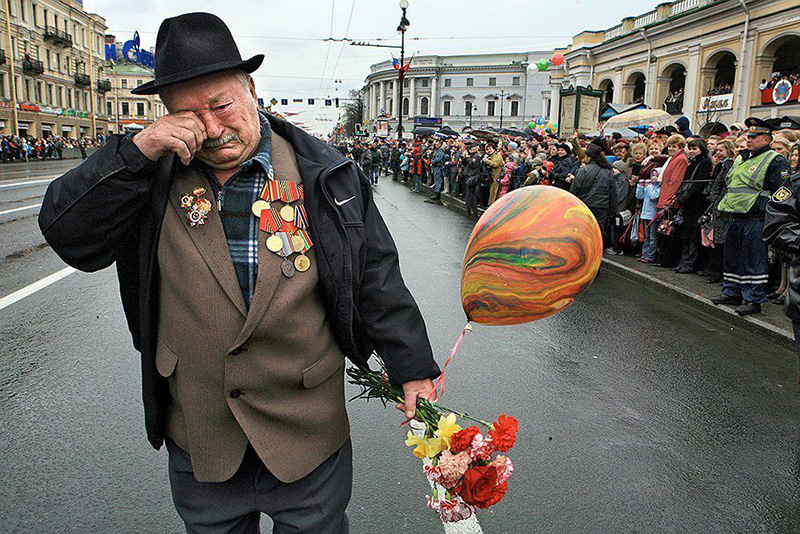
“The UDHR was more a reaction to the past than a protection for the future.”
(Hoang’s note: It’d be tremendously reasonable for us to know about the Universal Declaration of Human Rights and think of it. This is of the understanding of the universal good and not a submission to any thoughts of one-size-fit-all.)
In the shadow of the horrors of World War II in 1945, the escalating conflicts between the Axis Powers (Germany, Italy and Japan) and the Allied Powers (France, Great Britain, the United States, the Soviet Union, and China) were absolutely detrimental to not only the belligerent powers but also to the rest of the world, specifically the civilians. The establishment of the United Nations (UN) in 1945 was thus considered such an indispensable entity, which could rotate the axle from the battleground to the circular negotiated table.
From the vision of bringing a new international institution, the UN determined its missions to robust the organization to become an acute international organization by providing a new platform for all nations to participate in the diplomatic resolution of conflicts and only using military force if required. Therefore, the need to have a guiding principle, which considered to be used as the highest principles of rights for every nation on the Earth, remained on the top of the senior discussions of the UN.
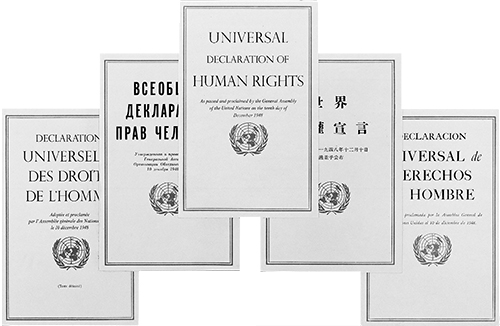
The urge to have a universal document of human rights was vital when it seemed to be the prerequisite to protect the world out of wars or perhaps justice for all of the fundamental human rights and humanity. The Universal Declaration of Human Rights was created and signed in Paris on 10 December 1948. The document which Eleanor Roosevelt – one of the eight people attended and participated to draft and officially write the UDHR supposed the importance of the document lied in the fact that “throughout the world there are many people do not enjoy the basic rights which have come to be accepted in many other parts of the world as inherent rights of all individuals, without which no one can live in dignity and freedom.”
However, under the context of the world after the wars and the appearance of the UDHR caused many controversial ideas in the surrounding of the human rights debate. Some scholars pointed out the preeminence of the document while others criticized its long-lasting values of it. In this discussion, those thoughts will be discussed in three main parts including the use of the language of the UDHR, the Universal Declaration: a discovery or an invention?, and the last part will be integrated with the conclusion with an evaluation of the UDHR past and contemporary values.
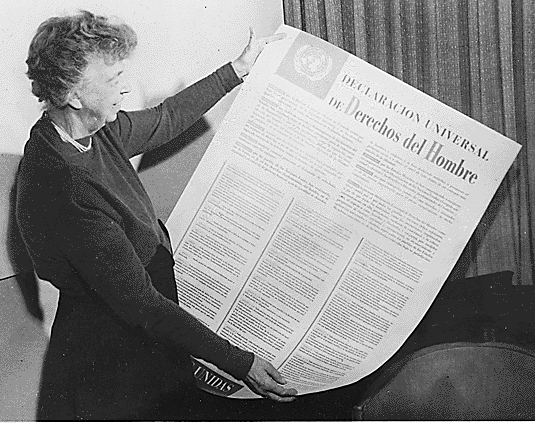
Eleanor Roosevelt with the Spanish language version of the Universal Declaration of Human Rights. (https://en.wikipedia.org/wiki/Universal_Declaration_of_Human_Rights)
After the atrocities of the world conflicts and its pathos, the UDHR appeared under the light of the UN Human Rights Commission as an open gate with words to speak up the voices of the global citizens. The language used in the declaration can be seen as an indictment to the perpetrators of the world wars’ atrocities. In fact, the loss of battles, the damage of lands, and the casualties were borne with witnesses and sufferings of all global citizens. That many scholars suppose to be the genocidal period of the dark ages of world history.
Having said that, the proclamation of the UDHR by the UN General Assembly in Paris on 10 December 1948 set a standard vision of principles, which required the diplomatic solutions rather than the joining in of the military forces individually or unilateral decisions. This led to a critical point of what the UDHR included and what people of the world expected to know about it.
Firstly, the UDHR was not the first document of human rights while it was first known by The Declaration of Independence 1776 (The United States) and The Declaration of Rights of Man and Citizen 1789 (The French Declaration of Rights). To analyze, it is worth to bring about the discussion of the “objects” of those documents. In the French document, it obviously wrote the rights of “man” and citizen”, while the America document referred in the title “independence” and other pronouns consisting of “we” in the preamble and “he” in the articles’ section.

The backstories of human rights declarations from the United States and France created a lesson on the stature of writing a universal document. In the opening of the document, the UDHR acknowledged the rights of “all human beings”, and “everyone”, especially it called the name of the human dignity “without distinction of any kind, such as race, colour, sex, language religion, political or other opinions, national or social origin, property, birth or another status.” In order not to compare the big of countries or the organization, it is irrefutable that the preeminence of the Universal Declaration was about the generalized conception objected to all people living in the globe and without doubting the applicability or non-coverage of the declaration.
Secondly, the meaning of the use of words demonstrated a high level of conscious humanity. In terms of linguistics, if a document should be read in both descriptive and normative sense. Whilst it is understandable that the French Declaration included their “citizens” but it lacked “woman” or “women” acknowledgment, it is the reason for The Declaration of the Rights of Woman 1791 (Olympe de Gouges); or the American Declaration too. Eleanor Roosevelt wrote in her Promise of Human Rights that once the UN Charter recognized the Declaration, it based on its moral weight rather than the legal one.

The interpretation of the moral conception definitely lied in the fact of the human values when one can read this from the Declaration and see the inclusion of the self incorporated into the universality and no one could be left behind. However, the values of the used language are not to encapsulate a piece of the statement but it is supposed to utilize the applicable depth and width and even futuristic realms. In this case, the UDHR met a critical extent, which is the literature values. As described above that Eleanor supposed the Universal Declaration would be more moral weight.
In critics, one of the moral philosopher – Nietzsche who concluded, “If there is nothing to morality but expressions of will, [then] my morality can only be what my will creates. There can be no place for such fictions as natural [or human] rights.” When the discussants mentioned about “will”, this was interrelated to many aspects of the cultural values in accordance with the anthropological, philosophical factors, the religious faith-based understanding, and the social norms too. As such language is one of the human products created by thoughts of both individualism and collectivism. The “will” is understood as one of the distinctive elements of different cultures in the world, and that shapes the inherent beliefs to raise a person. In other words, this is defined as morality standardized by the roots of every religion universally.
As a result, the language used in the UDHR provisions inevitably arose questions under the context of the world after the wars and divergent perspectives about the universally applicable values. Besides it is worth seeing the world seeking more solidarity and unity in the writing the UDHR in response to the past and also set forth the universal respect of human rights. Hence, after all, the aforementioned analysis, the language expressions in the UDHR are irrefutable that it is more advanced and clearly historical.
The issue of interpretation has just mentioned above is the reason for the possibility of the universal values whether being universal or underwhelmed. The mission of the document remains the significance of its values or just to resolve the war aftermaths. Due to this argument, it is crucial to analyze the characteristics of the UDHR in two distinctive terms of a discovery or an intervention. Why is the Declaration still considered as a standardized document about human rights? Do the narratives around the values of the UDHR exacerbate the world’s relationship? In understanding why the UDHR caused controversies, it is necessary to examine the result of the ratification.
There were of 58 member states with 50 ratified the UDHR while 8 abstained including the Communist abstentions due to the rights of the individual and the state, the Saudi Arabian abstention due to the issues of equal marriage rights and freedom of religion, and the South African abstention because of Apartheid. However, this result was not surprised. In the very beginning, in the establishment of the Human Rights Drafting Committee and the Commission, the number of elected member nations was kept in consideration.
The Drafting Committee including 8 different representatives of member states while the Commission changed from 25 members to 18 members and Eleanor explained this due to “for fear a large group might mark our work very difficult to accomplish”, and many small nations and minority groups or those opposed could see the document such a deceive piece, then the need to write the Conventions, which are the UDHR instruments and to present for nation by nation ratification. It is, thus, a question to the Committee and the Commission that in autumn 1948, whether or not the small powers had minimum chance to hear, witness, and actively discuss the meaning of human rights.
More importantly, a contrary proposition contradicted “what is held to be a human right in one society may be regarded as anti-social by another people, or by the same people in a different period of their history.”
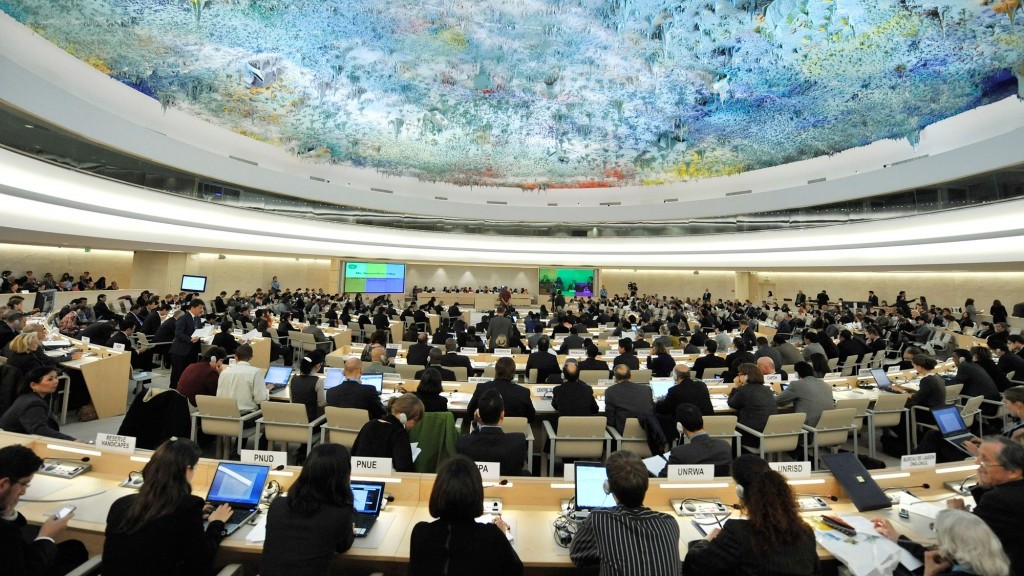
The HRs Council
In addition, this event was possibly a reason for many critics to question the Western ideologies lied in the Universal Document. That led to one of the leading causes surround this question was the ethnocentrism and the Declaration is just a product of Western. Morsink described this as trying “to square the circle” and featuring Western cultural and philosophical assumptions, along with the Western liberal democracies when writing the code of ethics into the Universal Declaration.
Especially, the birth of this Declaration was not too long and right after the world war period (The Holocaust, the genocides). When this was only the battle of the Westerns and those involved in the belligerences, the rest of the world did not wish to engage with even a tiny thing to the wars or conflicts. Having said that, although there was no implementation machinery for the UDHR to adopt, “it floated above all local and regional contingencies…and served as a midwife in the birth of all these other more concrete and detailed international instruments.” This is the answer to the discovery of the UDHR.
In parallel, once the proclamation of the UDHR under the majority acknowledgement of the member states at that very moment, the Declaration went in pragmatic of most aspects of life, which was henceforth nothing could be changed. From that perspective, it is time to investigate the legacy of the UDHR. In the tenth, the fiftieth, sixtieth and the 150th anniversary in of the Human Rights Days, people continuously witnessed the achievements and its flawlessness. This included the Apartheid, anti-colonialism, anti-imperialism, the White Revolution, the Third World human rights rhetoric, the Vietnam War, the nuclear devastation of Hiroshima and Nagasaki, and other wars in Asian. Those mentioned were both unexpected and oriented things happened to the world, which there were the participations of bigger powers.


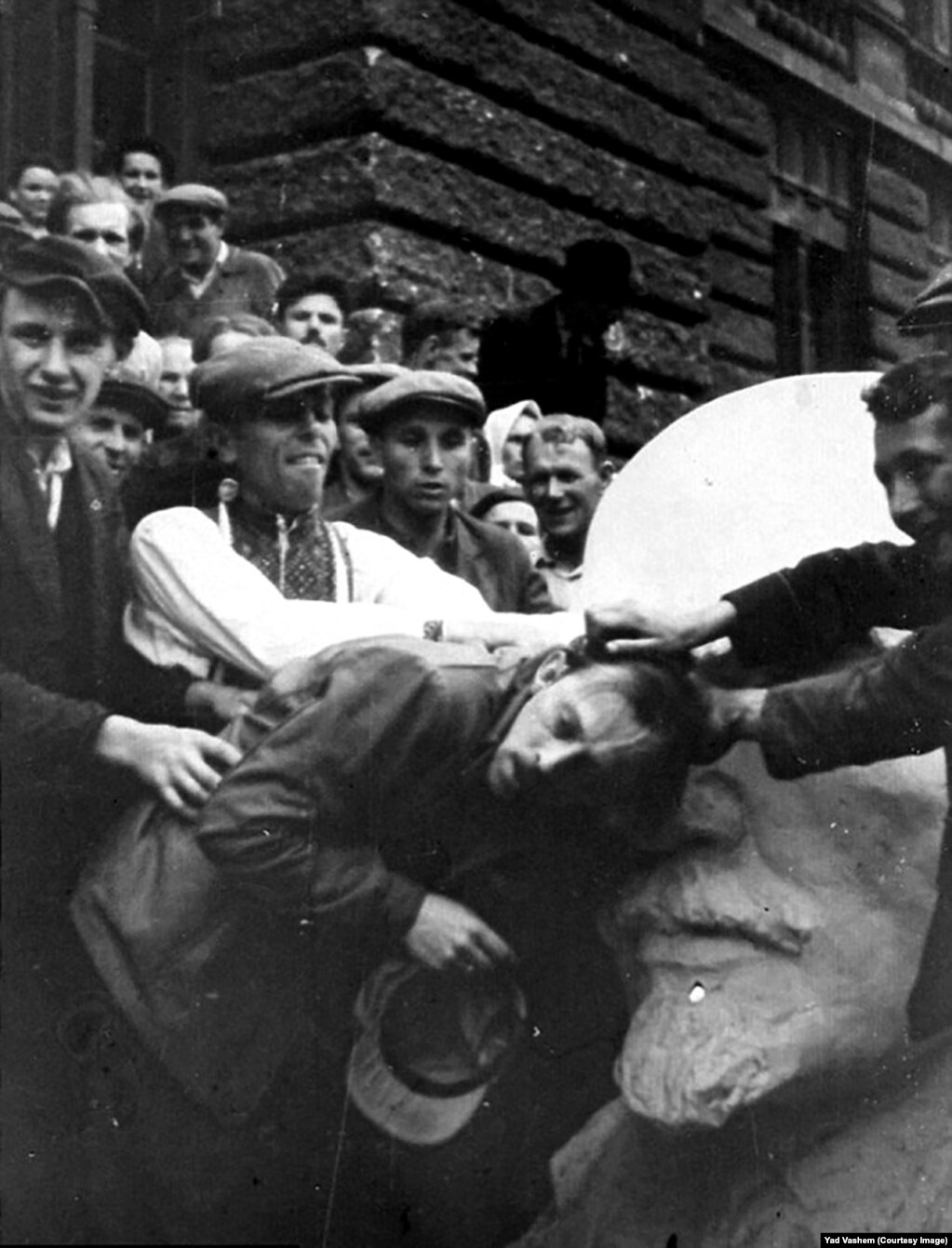
For many, this was so-called human rights abuses or “die at birth” and were such “pre-fabricated conduits through which to work, and norms to recover, rather than invent”, and thus brought out the normative death of the UDHR. However, it cannot be denied that thanks to the UDHR the world kept thinking about the rights every human person and the dignity of living. The illustrations were the Feminism Movements, the Gay Liberation Movement (Stonewall), the liberation of colonized countries in all over the world and gain independence, along with the negotiations of the belligerent and involved sides and the writing documents of International Human Rights Covenant, Convention, many other memorandums. At this critical stage, the proclamation of the UDHR was suffered from the discussant controversies all over the world. Nevertheless, it can be seen that the birth of it set a new platform of diplomatic solutions for all nations and the United Nations regardless of powers.

In conclusion, The Universal Declaration of Human Rights demonstrated its preeminent role in the world, which brings discussions and research around it. The significance of the UDHR from the concurrent, contemporary until the present is its individual empowerment, which is an absolutely basic but important point of all time. The values of the UDHR will be continued to discuss while it did write a little thing but tremendous meaning of each inherent dignity of human beings, equal and inalienable rights, and instruments linked with “freedom, justice and peace” throughout every corner worldwide where the lives of human beings are existence.
Bibliography
Bayefsky, Anne F. (1999). The legacy of the Universal Declaration of Human Rights. ILSA Journal of International & Comparative Law, 5(2), 261-265.
Burke, Roland. “How time flies: Celebrating the Universal Declaration of Human Rights in the 1960s,” The International History Review, 33:3, 394-420, DOI: 10.1080/07075332.2015.1065897
Morsink, Johannes. The Universal Declaration of Human Rights: Origins, Drafting and Intent. Philadelphia: The University of Pennsylvania Press, 1991
Roosevelt, Eleanor. The Promise of Human Rights, Foreign Affairs, accessed 13 October 2017, https://www2.gwu.edu/~erpapers/documents/articles/promiseofhumanrights.cfm
The Universal Declaration of Human Rights, United Nations, accessed 13 October 2017, http://www.un.org/en/universal-declaration-human-rights/index.html
Waltz, Susan. “Universalizing Human Rights: The Role of Small States in the Construction of the Universal Declaration of Human Rights,” Human Rights Quarterly, Vol. 23, No. 1 (2001), 44-72, http://www.jstor.org.ezproxy2.acu.edu.au/stable/pdf/4489323.pdf?refreqid=excelsior%3Abe2a7aca60964a4c34f938ff0fdd89a4
 The Digerati Politics
Hi there, this weekend is nice in support of me, because this time i am reading this enormous informative
paragraph here at my residence.
LikeLike
Hi, Rigoberto. It’s great to view your comment! Thank you and have a good day!
LikeLike
Hello, I think your website might be having browser compatibility issues. When I look at your blog site in Ie, it looks fine but when opening in Internet Explorer, it has some overlapping. I just wanted to give you a quick heads up! Other then that, fantastic blog!
LikeLike